What Is MLPerf?
MLPerf™ benchmarks—developed by MLCommons, a consortium of AI leaders from academia, research labs, and industry—are designed to provide unbiased evaluations of training and inference performance for hardware, software, and services. They’re all conducted under prescribed conditions. To stay on the cutting edge of industry trends, MLPerf continues to evolve, holding new tests at regular intervals and adding new workloads that represent the state of the art in AI.
Inside the MLPerf Benchmarks
MLPerf Inference v5.1 measures inference performance on 10 different AI models, including a variety of large language models (LLMs), a reasoning LLM, text-to-image generative AI, recommendation, text-to-speech, and graph neural network (GNN).
MLPerf Training v5.1 measures the time to train seven different models, covering the following use cases: LLMs (pretraining and fine-tuning), image generation, GNN, object detection, and recommendation.


NVIDIA Blackwell Ultra Delivers up to 50x Better Performance and 35x Lower Cost for Agentic AI
Built to accelerate the next generation of agentic AI, NVIDIA Blackwell Ultra delivers breakthrough inference performance with dramatically lower cost. Cloud providers such as Microsoft, CoreWeave, and Oracle Cloud Infrastructure are deploying NVIDIA GB300 NVL72 systems at scale for low-latency and long-context use cases, such as agentic coding and coding assistants.
This is enabled by deep co-design across NVIDIA Blackwell, NVLink™, and NVLink Switch for scale-out; NVFP4 for low-precision accuracy; and NVIDIA Dynamo and TensorRT™ LLM for speed and flexibility—as well as development with community frameworks SGLang, vLLM, and more.

NVIDIA MLPerf Benchmark Results
-
Training
-
Inference
The NVIDIA platform achieved the fastest time to train on all seven MLPerf Training v5.1 benchmarks. Blackwell Ultra made its debut, delivering large leaps for large language model pretraining and fine-tuning, enabled by architectural enhancements and breakthrough NVFP4 training methods that increase performance and meet strict MLPerf accuracy requirements. NVIDIA also increased Blackwell Llama 3.1 405B pretraining performance at scale by 2.7x through a combination of twice the scale and large increases in performance per GPU enabled by NVFP4. NVIDIA also set performance records on both newly-added benchmarks—Llama 3.1 8B and FLUX.1—while continuing to hold performance records on existing recommender, object detection, and graph neural network benchmarks.
NVIDIA Blackwell Ultra Delivers Large Leap in MLPerf Training Debut
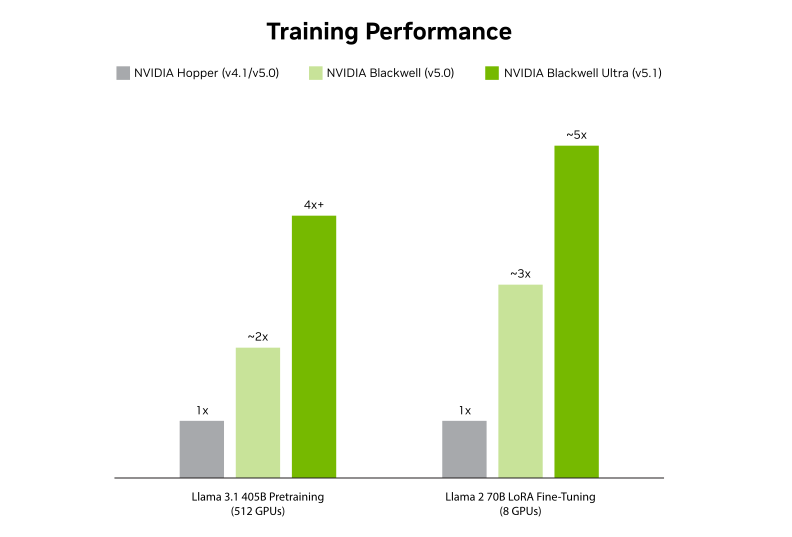
MLPerf™ Training v5.0 and v5.1 results retrieved from www.mlcommons.org on November 12, 2025, from the following entries: 4.1-0050, 5.0-0014, 5.0-0067, 5.0-0076, 5.1-0058, 5.1-0060. The MLPerf™ name and logo are trademarks of MLCommons Association in the United States and other countries. All rights reserved. Unauthorized use is strictly prohibited See www.mlcommons.org for more information.
Annual Rhythm and Extreme Co-Design for Sustained Training Leadership
The NVIDIA platform delivered the fastest time to train on every MLPerf Training v5.1 benchmark, with innovations across chips, systems, and software enabling sustained training performance leadership, as shown on industry-standard, peer-reviewed performance data.
Max-Scale Performance
| Benchmark | Time to Train |
|---|---|
| LLM Pretraining (Llama 3.1 405B) | 10 minutes |
| LLM Pretraining (Llama 3.1 8B) | 5.2 minutes |
| LLM Fine-Tuning (Llama 2 70B LoRA) | 0.40 minutes |
| Image Generation (FLUX.1) | 12.5 minutes |
| Recommender (DLRM-DCNv2) | 0.71 minutes |
| Graph Neural Network (R-GAT) | 0.84 minutes |
| Object Detection (RetinaNet) | 1.4 minutes |
MLPerf™ Training v5.0 and v5.1 results retrieved from www.mlcommons.org on November 12, 2025, from the following entries: 5.0-0082, 5.1-0002, 5.1-0004, 5.1-0060, 5.1-0070, 5.1-0072. The MLPerf™ name and logo are trademarks of MLCommons Association in the United States and other countries. All rights reserved. Unauthorized use is strictly prohibited. See www.mlcommons.org for more information.
Blackwell Ultra Sets New Reasoning Inference Records in MLPerf Inference v5.1
The NVIDIA platform set many new records in MLPerf Inference v5.1—including on the challenging new DeepSeek-R1 reasoning and Llama 3.1 405B Interactive tests—and continues to hold every per-GPU MLPerf Inference performance record in the data center category. The GB300 NVL72 rack-scale system, based on the NVIDIA Blackwell Ultra GPU architecture, made its debut just six months after NVIDIA Blackwell, setting new records on the DeepSeek-R1 reasoning inference benchmark. And NVIDIA Dynamo also made its debut this round, with its disaggregated serving, dramatically increasing the performance of each Blackwell GPU on Llama 3.1 405B Interactive. The performance and pace of innovation in the NVIDIA platform enable higher intelligence, greater AI factory revenue potential, and lower cost per million tokens.
The NVIDIA Platform Holds Every Data Center per-GPU Record in MLPerf Inference
| Benchmark | Offline | Server | Interactive |
|---|---|---|---|
| DeepSeek-R1 | 5,842 Tokens/Second | 2,907 Tokens/Second | * |
| Llama 3.1 405B | 224 Tokens/Second | 170 Tokens/Second | 138 Tokens/Second |
| Llama 2 70B 99.9% | 12,934 Tokens/Second | 12,701 Tokens/Second | 7,856 Tokens/Second |
| Llama 3.1 8B | 18,370 Tokens/Second | 16,099 Tokens/Second | 15,284 Tokens/Second |
| Mistral 8x7B | 16,099 Tokens/Second | 16,131 Tokens/Second | * |
| Stable Diffusion XL | 4.07 Samples/Second | 3.59 Queries/Second | * |
| DLRMv2 99% | 87,228 Tokens/Second | 80,515 Tokens/Second | * |
| DLRMv2 99.9% | 48,666 Tokens/Second | 46,259 Tokens/Second | * |
| RetinaNet | 1,875 samples/second/GPU | 1,801 queries/second/GPU | * |
| Whisper | 5,667 Tokens/Second | * | * |
| Graph Neural Network | 81,404 Tokens/Second | * | * |
* Scenarios not part of the MLPerf Inference v5.0 or v5.1 benchmark suites.
MLPerf Inference v5.0 and v5.1, Closed Division. Results retrieved from www.mlcommons.org on September 9, 2025. NVIDIA platform results from the following entries: 5.0-0072, 5.1-0007, 5.1-0053, 5.1-0079, 5.1-0028, 5.1-0062, 5.1-0086, 5.1-0073, 5.1-0008, 5.1-0070,5.1-0046, 5.1-0009, 5.1-0060, 5.1-0072. 5.1-0071, 5.1-0069 Per chip performance derived by dividing total throughput by number of reported chips. Per-chip performance is not a primary metric of MLPerf Inference v5.0 or v5.1. The MLPerf name and logo are registered and unregistered trademarks of MLCommons Association in the United States and other countries. All rights reserved. Unauthorized use strictly prohibited. See http://www.mlcommons.org for more information.
The Technology Behind the Results
The complexity of AI demands a tight integration between all aspects of the platform. As demonstrated in MLPerf’s benchmarks, the NVIDIA AI platform delivers leadership performance with the world’s most advanced GPU, powerful and scalable interconnect technologies, and cutting-edge software—an end-to-end solution that can be deployed in the data center, in the cloud, or at the edge with amazing results.
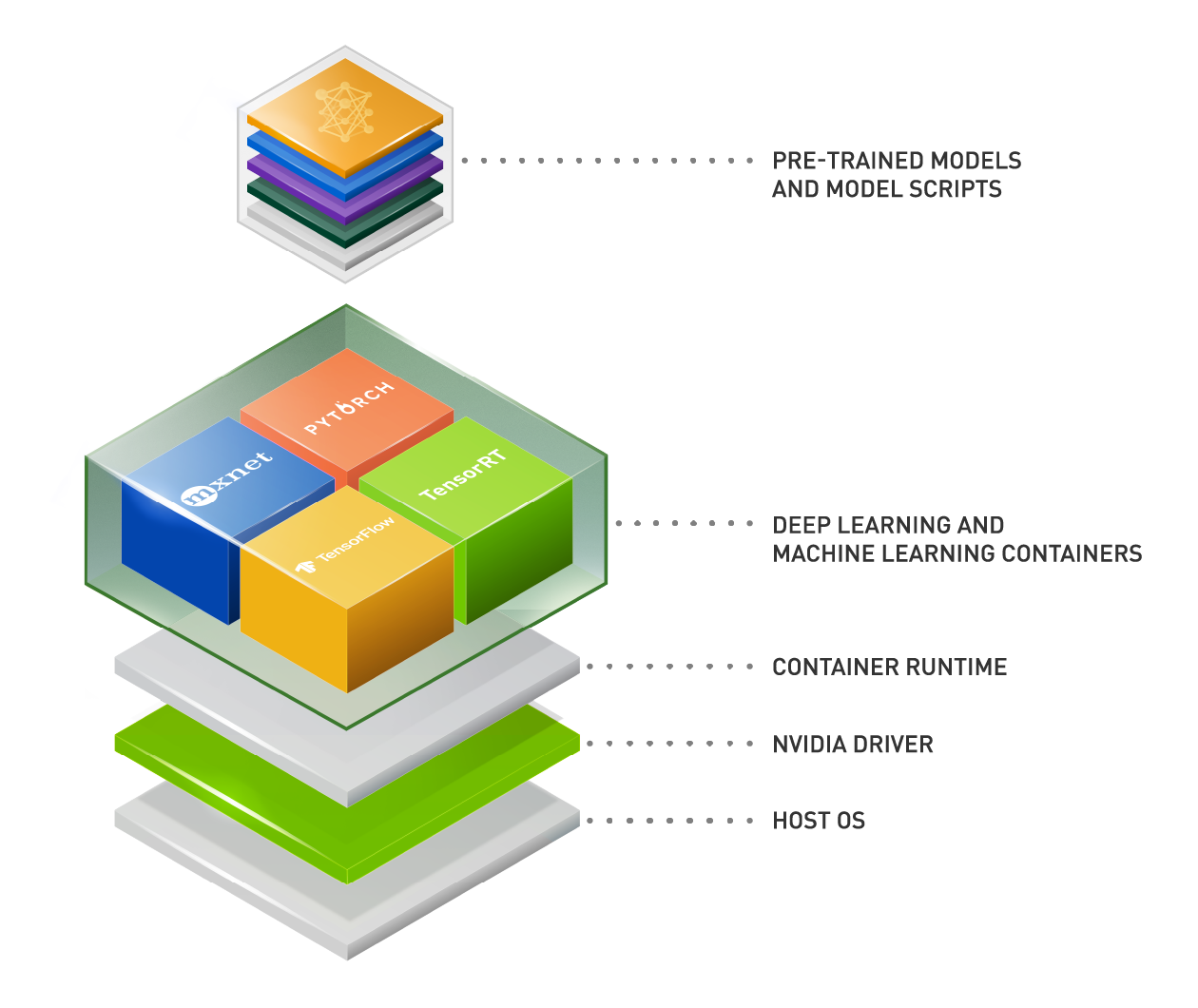
Optimized Software That Accelerates AI Workflows
An essential component of NVIDIA’s platform and MLPerf training and inference results, the NGC™ catalog is a hub for GPU-optimized AI, HPC, and data analytics software that simplifies and accelerates end-to-end workflows. With over 150 enterprise-grade containers—including workloads for generative AI, conversational AI, and recommender systems; hundreds of AI models; and industry-specific SDKs that can be deployed on premises, in the cloud, or at the edge—NGC enables data scientists, researchers, and developers to build best-in-class solutions, gather insights, and deliver business value faster than ever.
Leadership-Class AI Infrastructure
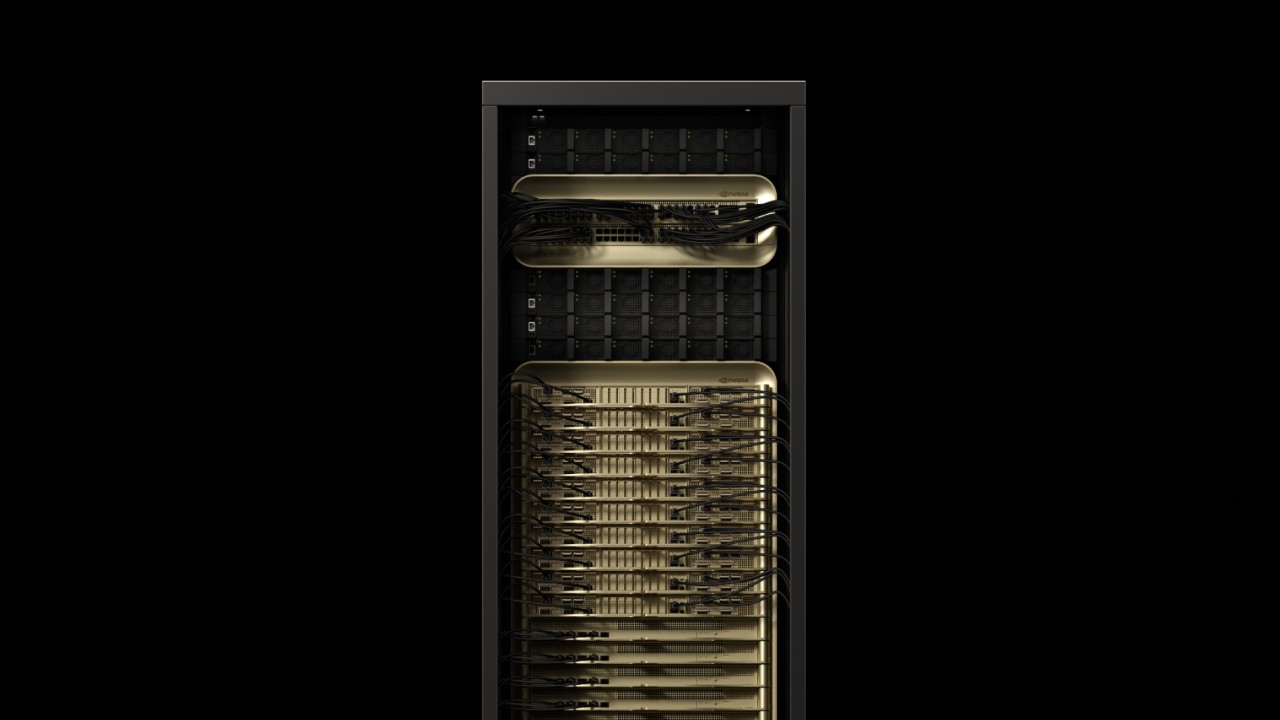
Achieving world-leading results across training and inference requires infrastructure that’s purpose-built for the world’s most complex AI challenges. The NVIDIA AI platform delivered leading performance powered by the NVIDIA Blackwell and Blackwell Ultra platforms, including the NVIDIA GB300 NVL72 and GB200 NVL72 systems, NVLink and NVLink Switch, and Quantum InfiniBand. These are at the heart of AI factories powered by the NVIDIA data center platform, the engine behind our benchmark performance.
In addition, NVIDIA DGX™ systems offer the scalability, rapid deployment, and incredible compute power that enable every enterprise to build leadership-class AI infrastructure.
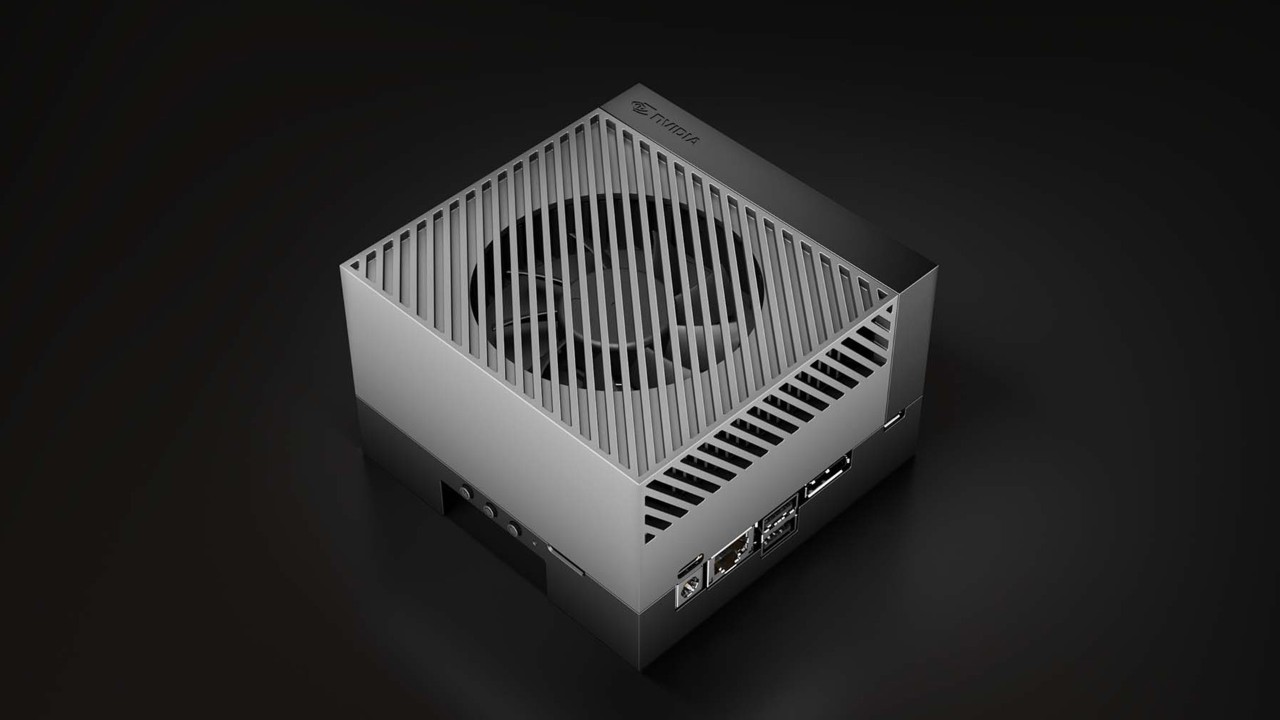
Unlocking Generative AI at the Edge With Transformative Performance
NVIDIA Jetson Orin offers unparalleled AI compute, large unified memory, and comprehensive software stacks, delivering superior energy efficiency to drive the latest generative AI applications. It’s capable of fast inference for any generative AI models powered by the transformer architecture, providing superior edge performance on MLPerf.
Learn more about our data center training and inference performance.

Large Language Models
MLPerf Training uses the Llama 3.1 generative language model with 405 billion parameters and a sequence length of 8,192 for the LLM pretraining workload with the c4 (v3.0.1) dataset. For the LLM fine-tuning test, it uses the Llama 2 70B model with the GovReport dataset with sequence lengths of 8,192. Llama 3.1 8B also uses the C4 dataset with sequence lengths of 8,192.
MLPerf Inference uses the Llama 3.1 405B model with the following datasets: LongBench, RULER, and GovReport summary; Llama 2 70B model with the OpenORCA dataset; the Mixtral 8x7B model with the OpenORCA, GSM8K, and MBXP datasets; and the Llama 3.1 8B model with the CNN-DailyMail dataset.

Text-to-Image
MLPerf Training uses the FLUX.1 text-to-image model trained on the CC12M dataset with COCO 2014 dataset for eval.
MLPerf Inference uses the Stable Diffusion XL (SDXL) text-to-image model with a subset of 5,000 prompts from the coco-val-2014 dataset.

Recommendation
MLPerf Training and Inference use the Deep Learning Recommendation Model v2 (DLRMv2) that employs DCNv2 cross-layer and a multi-hot dataset synthesized from the Criteo dataset.

Object Detection (Lightweight)
MLPerf Training uses Single-Shot Detector (SSD) with ResNeXt50 backbone on a subset of the Google OpenImages dataset.

Reasoning LLM
MLPerf Inference uses DeepSeek-R1 model with samples sourced from the following datasets: AIME, MATH500, GPQA-Diamond, MMLU-Pro, LiveCodeBench.

Natural Language Processing (NLP)
MLPerf Training uses Bidirectional Encoder Representations From Transformers (BERT) on the Wikipedia 2020/01/01 dataset.

Graph Neural Network
MLPerf Training uses R-GAT with the Illinois Graph Benchmark (IGB) - Heterogeneous dataset.

Speech-to-Text
MLPerf Inference uses Whisper-Large-V3 with the LibriSpeech dataset.


