How Gaijin Raised War Thunder’s Realism with DLSS 5 With 3D-Guided Neural Rendering
Gaijin Entertainment’s War Thunder features thousands of high-fidelity, accurately rendered tanks and other ground military vehicles, planes, warships, and more, which players take command of in a variety of PvP and PvE arcade and realistic game modes. First released in 2013, War Thunder has been constantly updated, adding new technologies, effects, and enhancements, including DLSS 4.5 with Multi Frame Generation, Super Resolution, Ray Reconstruction, and DLAA, as well as Reflex, ray tracing, and path-traced global illumination.
In mid-November, War Thunder’s Eagle's Shadow major update goes live, adding NVIDIA DLSS 5 with 3D-Guided Neural Rendering, dozens of new planes, ships, and tanks, along with cluster bombs for planes, and visual effect enhancements, increasing the realism and dynamism of battle.
War Thunder’s visual identity is built around authentic vehicles. For Gaijin Entertainment, any gain in realism has to preserve the markings, materials, and overall look that players recognize.
NVIDIA DLSS 5 with 3D-Guided Neural Rendering runs as a final stage in the graphics pipeline, using the engine’s rendered frame and motion vectors as its foundation to add lifelike lighting and material detail. The Gaijin team integrated DLSS 5 into their Dagor Engine’s color pipeline, tuned it against the game’s reference look, and evaluated the results across air, ground, and naval combat.
We spoke with Kirill Stupin, Gaijin Entertainment’s War Thunder art director about the integration, the visual changes that stood out, and his advice for developers tuning DLSS 5 for their own games.
What was your guiding visual philosophy for War Thunder and has it changed over the game's lifetime?
As War Thunder is focused on authentic, real-world vehicles, we always aim to achieve the highest possible level of visual realism, with a slight degree of stylization to maintain a consistent overall look. Our visual philosophy has remained quite stable over the years, while the technology behind it is constantly evolving.
What were the visual targets you always wanted for War Thunder that DLSS 5 helped you achieve?
DLSS 5 delivers improved highlights and shadows while introducing a new level of microcontrast that we simply haven’t been able to achieve before. The result is a more natural, lifelike image, with finer detail and a stronger sense of realism.
What were your art team's first impressions when you saw DLSS 5 in War Thunder?
DLSS 5 does not completely change how War Thunder looks at first glance, and that’s good, as players would like us to stick to our original visual style. On the other hand, the sheer number of subtle improvements is so significant that some members of the team initially thought we had changed the rendering engine itself.
How did you integrate DLSS 5 into Dagor Engine, and how did NVIDIA support the process? Using one scene as an example, please explain how you evaluated sRGB input and arrived at your current DLSS 5 settings.
NVIDIA made very detailed documentation for the feature which helped about ~95% of the way. So much so that integration was a finger exercise except for one real challenge: DLSS 5 works in sRGB color-space and our engine – like most modern rendering engines – uses a linear HDR space in the rendering pipeline. For the best results we have to evaluate DLSS 5 before any postFX (bloom, motion blur, chromatic aberration and other cinematic effects) or UI. On the other hand, for maximum fidelity we had to feed DLSS 5 the sRGB frame with the same "look" that the player will see. This is a chicken and egg problem. To resolve this we had to make our color management pipeline invertible so that we can produce a "semi-final" looking image that DLSS 5 can work on in sRGB and then we can map the changes made by DLSS 5 back to linear HDR.
As for the setting we chose, on a representative scene, we compared sRGB input results against our reference look, and adjusted the model and intensity values to provide the best balance between enhancement and staying true to the game’s established art direction.
How did you tune DLSS 5 to preserve vehicle details, markings, and materials?
Historical accuracy of vehicles is central to War Thunder, so we iterated on the settings carefully to make sure markings, surface wear, and material properties stayed faithful to our original assets.
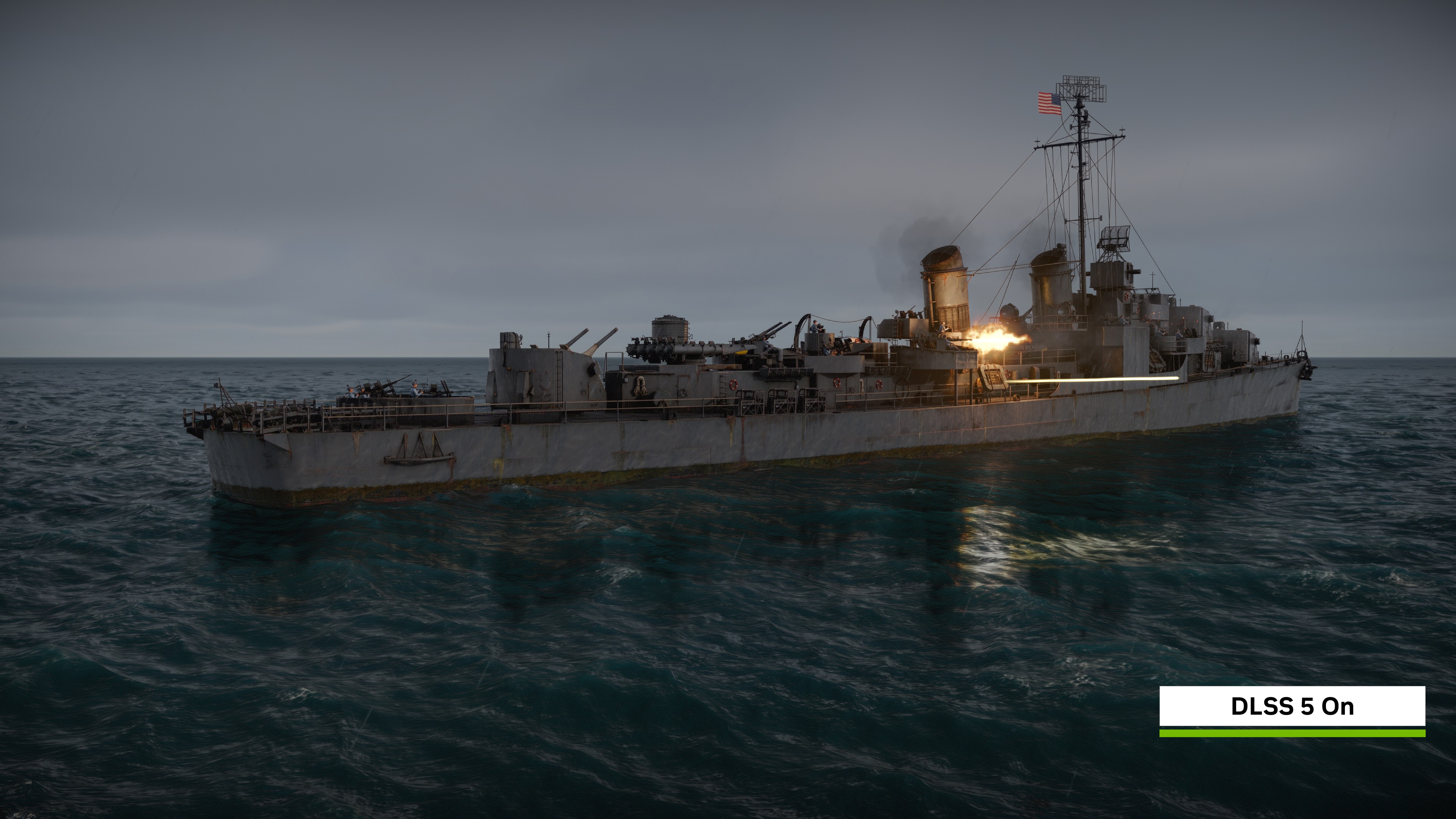
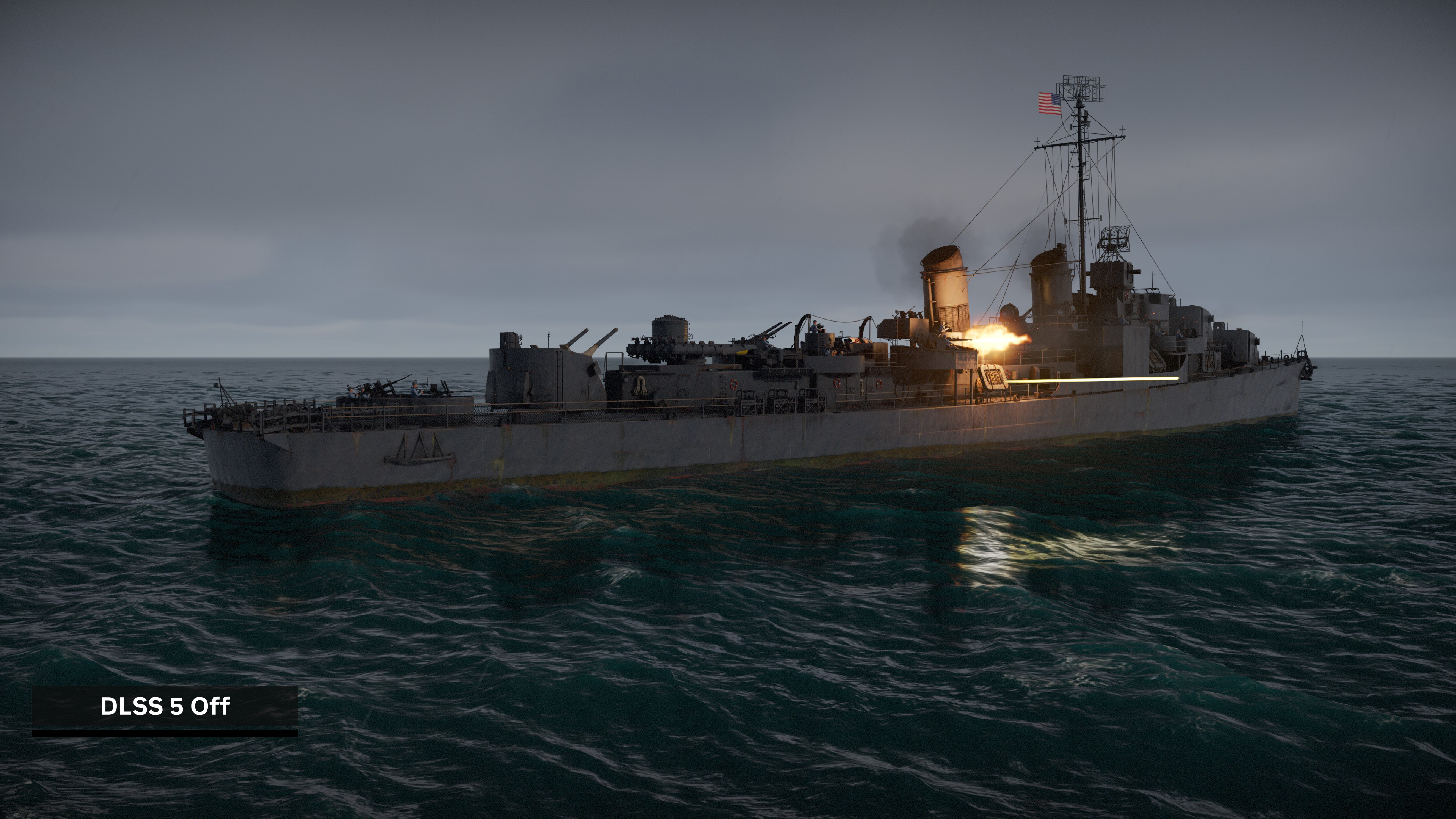
Click here to load a fullscreen 4K comparison
What approach for tuning did you take with respect to environments?
We aimed for a consistent approach across our wide variety of locations, letting DLSS 5 enrich lighting and atmosphere while respecting the mood and readability each map was designed for.
How did you evaluate image quality and performance across air, ground, and naval combat?
We reviewed air, ground, and naval scenarios separately, since each has very different viewing distances and visual priorities, and checked both image quality and performance to make sure the experience felt solid in every mode.
What are some of your favorite examples of DLSS 5 enhancing the look of units/vehicles in the game?
It’s hard to pick just one, but we’ve been especially pleased with how vehicles gain extra depth and presence under natural lighting, especially in dull weather settings, which makes them feel even more grounded in the scene.
Which ON/OFF scene best shows the results? Walk us through the visual changes and settings.
The most striking contrast appears in overcast conditions, especially with rain, where DLSS 5 brings out soft diffuse lighting, wet surfaces, and subtle material detail that make the scene feel far more atmospheric. Our chosen settings enhance this mood while keeping the overall look true to the game’s original art direction.
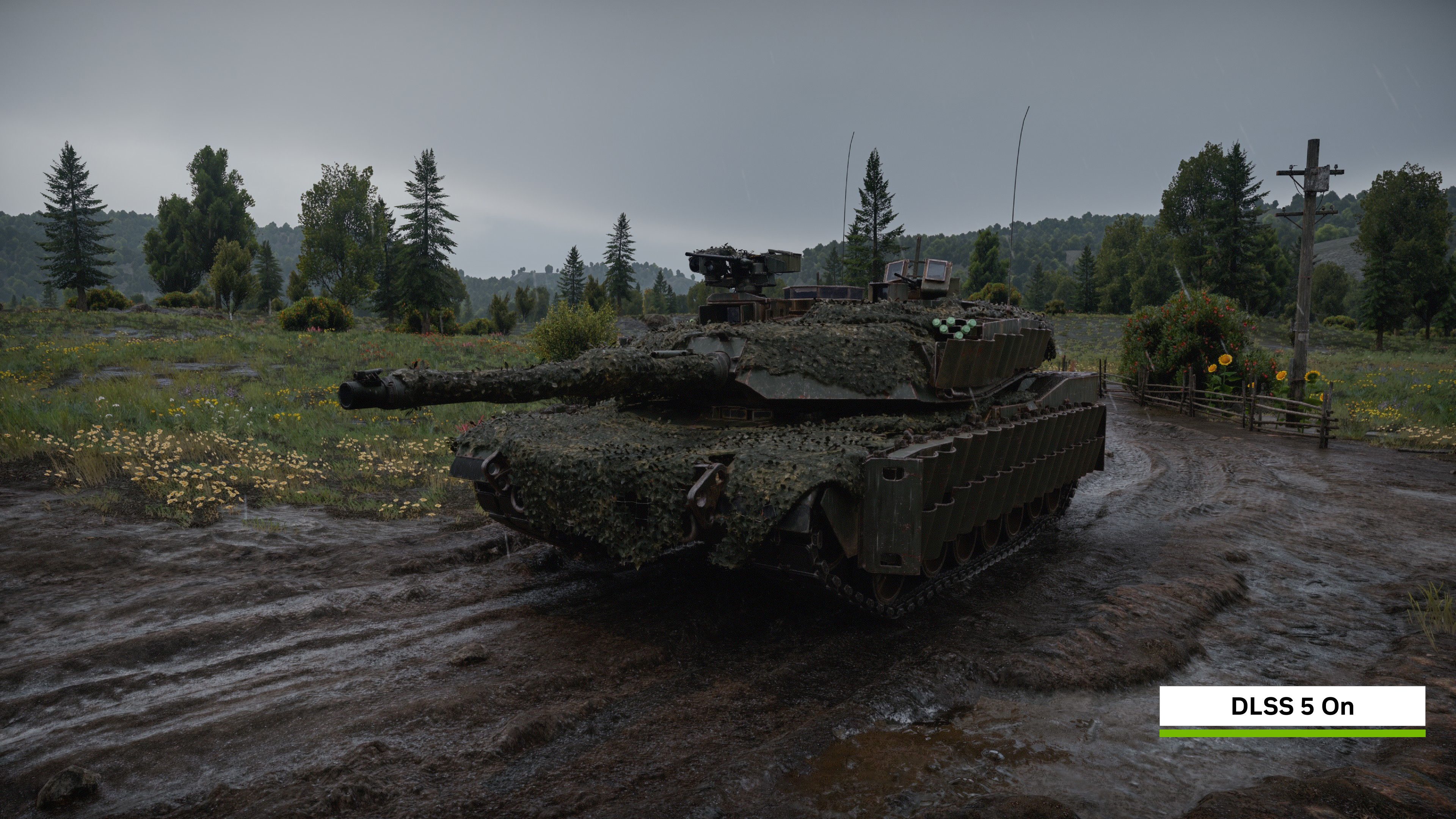
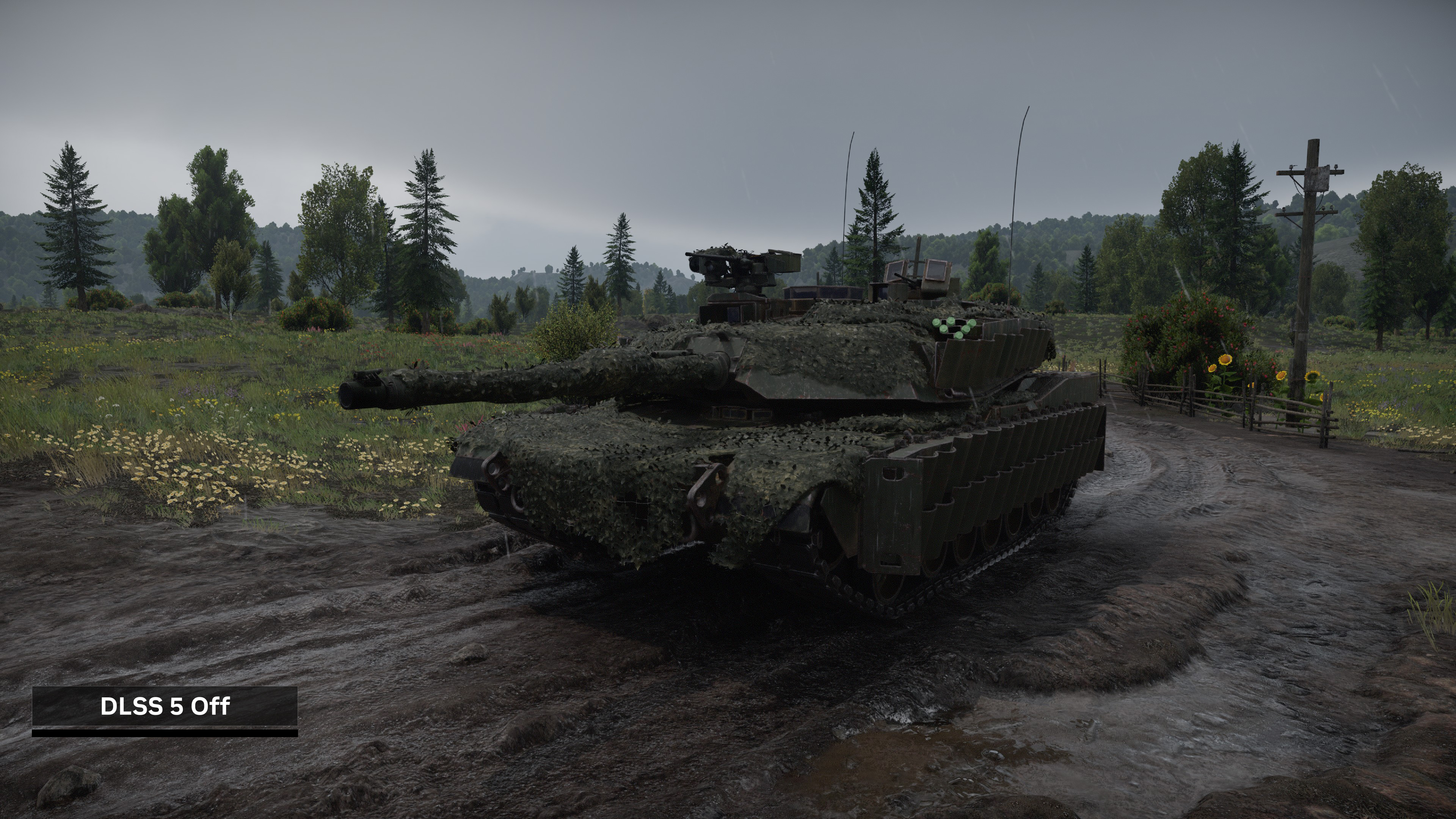
Click here to load a fullscreen 4K comparison
What has DLSS 5 enabled your team to achieve, and what would you tell other developers considering it?
DLSS 5 has helped us push the visual quality of the game further while preserving its recognizable style. Our advice to other developers is to invest time in tuning it against their own art direction, as the results are well worth it.
Stay Up To Date With The Latest DLSS Developer News
If you’re a developer and want to keep up to date with our latest DLSS updates, visit our DLSS developer page. You can also stay in touch with our game developer news:
- Subscribe to our newsletter (select gaming as your industry)
- Follow us on social: X, LinkedIn, Facebook, and YouTube
- Join our Discord community
If you’re a gamer, check out our new DLSS article to learn about the addition of DLSS 5 to even more games.