
NVIDIA cuPhoton
Make multidimensional data AI ready.
Image from the publicly available FIRE-2 cosmological zoom-in simulations (Wetzel et al. 2023, 2025) from the
Feedback In Realistic Environments (FIRE) project, generated using the Gizmo code (Hopkins 2015) and the
FIRE-2 physics model (Hopkins et al. 2018).
Overview
What Is NVIDIA cuPhoton?
Scientific discovery is often slowed by the time needed to process large, complex datasets. Scientists need large multidimensional datasets to be AI ready without spending critical time moving between specialized tools and CPU-bound processing stages.
NVIDIA cuPhoton helps scientists and research software teams GPU-accelerate scientific data processing and analysis workflows involving massive multidimensional datasets.
It addresses bottlenecks in data ingestion, processing, and analysis and makes multidimensional AI ready for AI training and agentic workflows, allowing scientists and researchers to reach scientifically useful results faster.
Demo
Unlocking the Dynamic Sky With GPU-Accelerated Pipelines
cuPhoton streamlines petabyte-scale processing, image subtraction, and transient detection for the Rubin Observatory Legacy Survey of Space and Time (LSST) Camera.
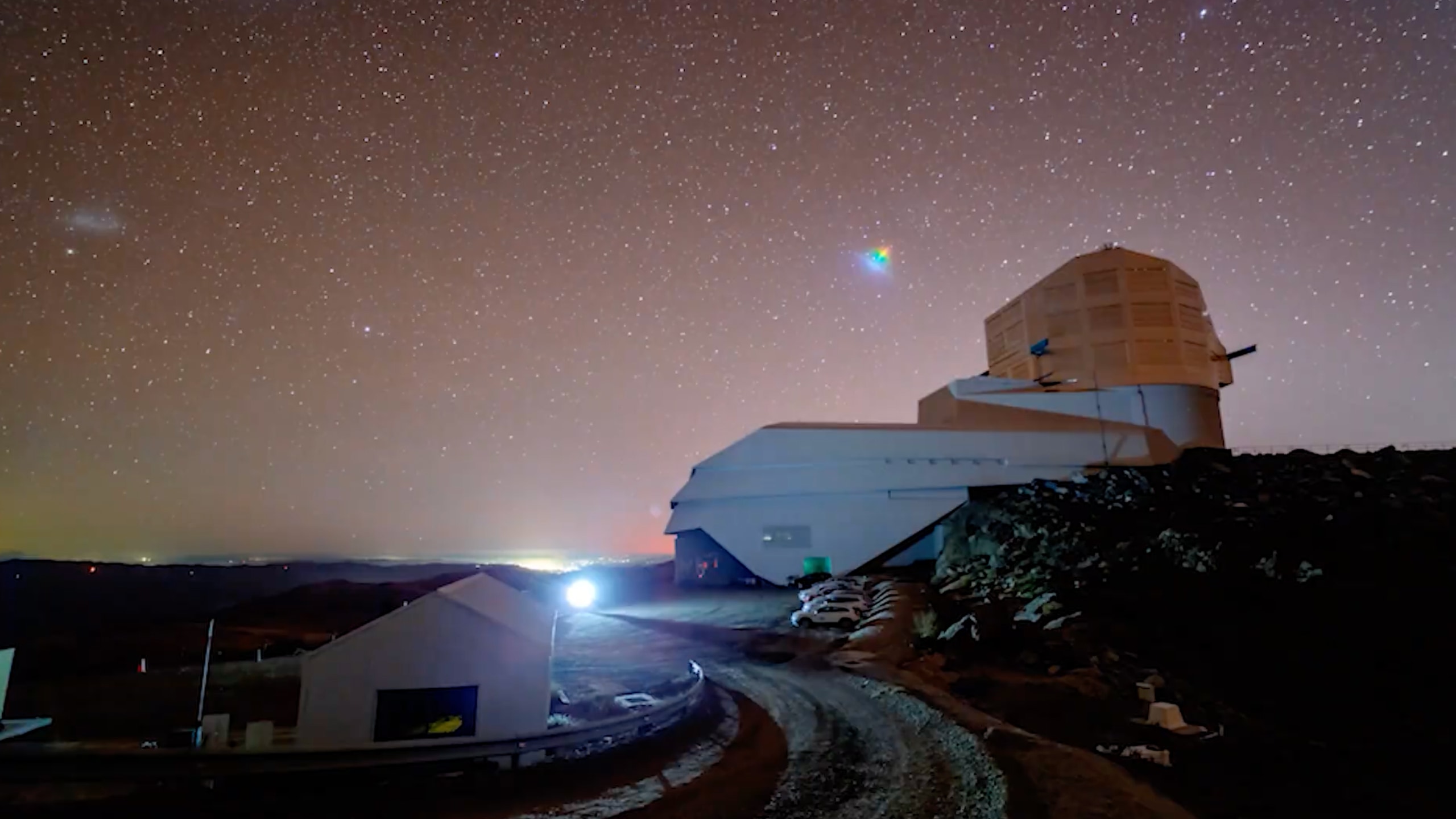
Watch how GPU-powered pipelines streamline data ingestion, point-spread function image subtraction, and AI-driven transient classification to detect dynamic astronomical events in real time.
Performance
End-to-End Scientific Pipeline Accelerated up to 15,000x
Transform scientific workflows across data loading, parameter fitting, image subtraction, and cross-correlation. cuPhoton delivers up to 14,900x faster input/output (IO) directly on the GPU memory, 460x faster cross-correlation, 2,960x faster multiparameter fitting, and 14,550x faster optimal image subtraction.

cuPhoton accelerates scientific workflows through specialized, GPU-optimized modules. The end-to-end data analytics pipeline consists of data loading, reading, processing, and analysis to extract scientific insights. Specifically, scaling on distributed systems of 64 NVIDIA GB200 NVL72 GPUs, xDataReader ingests FITS, HDF5, and VDIF data formats with NVIDIA GPUDirect™ Storage integration at up to 447 gigabytes per second (GB/s), compared to typically 0.03 GB/s on a single x86 CPU. xCorr reduces cross-correlation runtime from 31,993 seconds on x86 to just 69 seconds, xFit accelerates dipole fitting from 4,520 seconds on x86 down to 1.52 seconds, and xPois speeds up image mapping/subtraction from 18,333 seconds on x86 down to 1.26 seconds. These performance metrics were measured on datasets on a scale of hundreds of terabytes.
Technology
Physics-Aware Acceleration for Scientific Workflows
Accelerate every stage of the multidimensional imaging and analysis pipeline with cuPhoton’s modular CUDA-X™ building blocks.


Benefits
Purpose-Built for Enterprise Science and Research
Move complex experimental datasets seamlessly from acquisition to GPU-accelerated processing, analysis, and visualization.

GPU Acceleration Across Scientific Workflows
Move the entire ingest, clean, transform, reconstruct, subtract, reproject, trace-analyze, and AI preparation path onto NVIDIA GPUs.

Faster Time to Science
Drastically reduce the time required to convert raw multidimensional data into actionable scientific insights, making every iteration count during costly beam time or survey runs.

Reusable, Domain-Specific APIs
Access targeted, physics-aware APIs for astronomical image subtraction, transient classification, and x-ray trace analysis without rebuilding custom pipelines from scratch.

Scalable, High-Throughput Computing
Effortlessly scale data movement and compute across multi-GPU and multi-node architectures using GPU-optimized IO for massive scientific instruments.

Reproducible, Adaptable GPU-First Pipelines
Build verifiable Python workflows using familiar FITS and HDF5 formats integrated directly with CUDA Python, CuPy, and PyTorch.
Get Started
Ignite your next breakthrough. Get started with NVIDIA cuPhoton today.