DLSS 5 Comes To Hogwarts Legacy & RTX Spark, Powered By 2X Faster Model
DLSS 5 with 3D-Guided Neural Rendering launched last month, enhancing lighting and materials in NBA 2K27.
Today, we’re sharing what’s next for DLSS 5, starting with the release of the game-changing technology for NVIDIA RTX Spark laptops on October 16th.
That same day, NBA 2K27 will receive a 2X faster model that increases in-game frame rates. And the new 3D-Guided Neural Rendering model will power DLSS 5 in Hogwarts Legacy and Where Winds Meet in the coming weeks.
Additionally, October 23rd sees the addition of DLSS 5 to RTX Remix, giving modders even more options and tools for remastering classic games.
And our team has today released a beta of a new DLSS Frame Generation Performance Mode, which you can try now by downloading the latest NVIDIA app beta update.
For further information about all of our new DLSS updates, read on.
2026: A Year Of Relentless DLSS Innovation
Over the past 8 years, we’ve continuously innovated on DLSS, bringing new features, faster performance, and enhanced image quality.
This year has been our busiest yet, introducing DLSS 3D-Guided Neural Rendering, Dynamic Multi Frame Generation and higher Frame Generation multipliers, and delivering 2nd generation transformer AI model improvements across the entire suite of DLSS technologies.

Today, the enhancements and innovations continue.
DLSS 3D-Guided Neural Rendering Model Performance Gets 2X Faster
Through a combination of systematic pipeline optimizations and neural model refinements, the performance of DLSS 5’s 3D-Guided Neural Rendering model is improving by 2X this week, enabling even more gamers to enjoy DLSS 5’s transformative uplift in lighting and materials at higher frames rates and settings.
The DLSS 5 October update shrinks the footprint by 24% to roughly 118 million parameters while reducing 4K VRAM usage by 20%. The result is half the GPU overhead of the September version while maintaining comparable visual fidelity.
DLSS 5’s 3D-Guided Neural Rendering model is now 10X faster overall compared to when it was announced in March
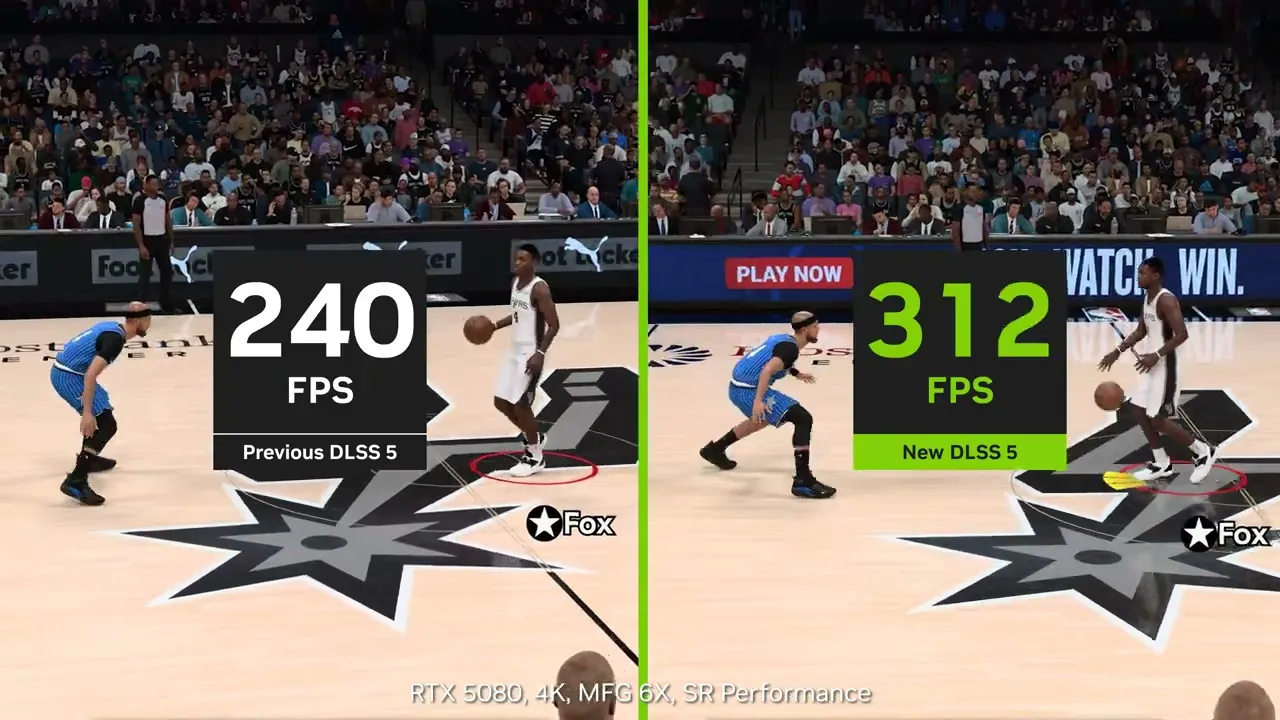
The new, more performant DLSS 5 model will debut in NBA 2K27 on October 16th on GeForce RTX 50 Series GPUs, RTX Spark laptops, and GeForce NOW, boosting frame rates by up to 1.4X. And it will ship by default with future DLSS 5 games.
DLSS 5 Coming To Hogwarts Legacy On November 5th
NVIDIA DLSS 5 with 3D-Guided Neural Rendering is coming to Hogwarts Legacy on November 5th, for GeForce RTX 50 Series, GeForce NOW, and RTX Spark.
Published by Warner Bros. Games under the Portkey Games label and developed by Avalanche Software, Hogwarts Legacy is an immersive, action, open-world role-playing-game set in the 1800s wizarding world that’s sold over 40 million copies.
Introducing an original story, the game puts fans at the center of their very own adventure. Beginning as a fifth-year student at Hogwarts School of Witchcraft and Wizardry, players embark on a journey through new and familiar locations, discover magical beasts, craft potions, master spell casting, upgrade talents and customize their character to become the witch or wizard they want to be.
NVIDIA DLSS 5 with 3D-Guided Neural Rendering elevates image quality, realism and immersion to new heights.
Where other DLSS technologies focus on reconstructing existing scene data to deliver higher-resolution images, additional frames, or cleaner ray-traced lighting, DLSS Neural Rendering takes the next step by using AI to generate the lifelike lighting and material details that real-time performance constraints have forced developers to strip away, allowing them to realize their original artistic vision.
Neural Rendering uses the game engine’s rendered frame, complete with its artist-designed geometry, textures, and lighting buffers, as an unyielding foundation. DLSS Neural Rendering becomes the final rendering stage of the graphics pipeline, infusing scenes with lifelike lighting and materials while ensuring the engine frame defines what must remain, and the artist directs what may change.
On GeForce RTX PCs and laptops, Hogwarts Legacy already includes support for DLSS Multi Frame Generation and Ray Reconstruction, accelerating and enhancing its ray-traced graphics that immerse players in the world of the famous school.
In a new update launching November 5th, DLSS Neural Rendering will be added to Hogwarts Legacy, and its other DLSS technologies upgraded to their newest versions. Avalanche Software has taken advantage of DLSS 5’s SDK controls to tune the integration to maintain the artistic intent and style of the game.
Take a look at DLSS 5 in Hogwarts Legacy in the comparisons below.
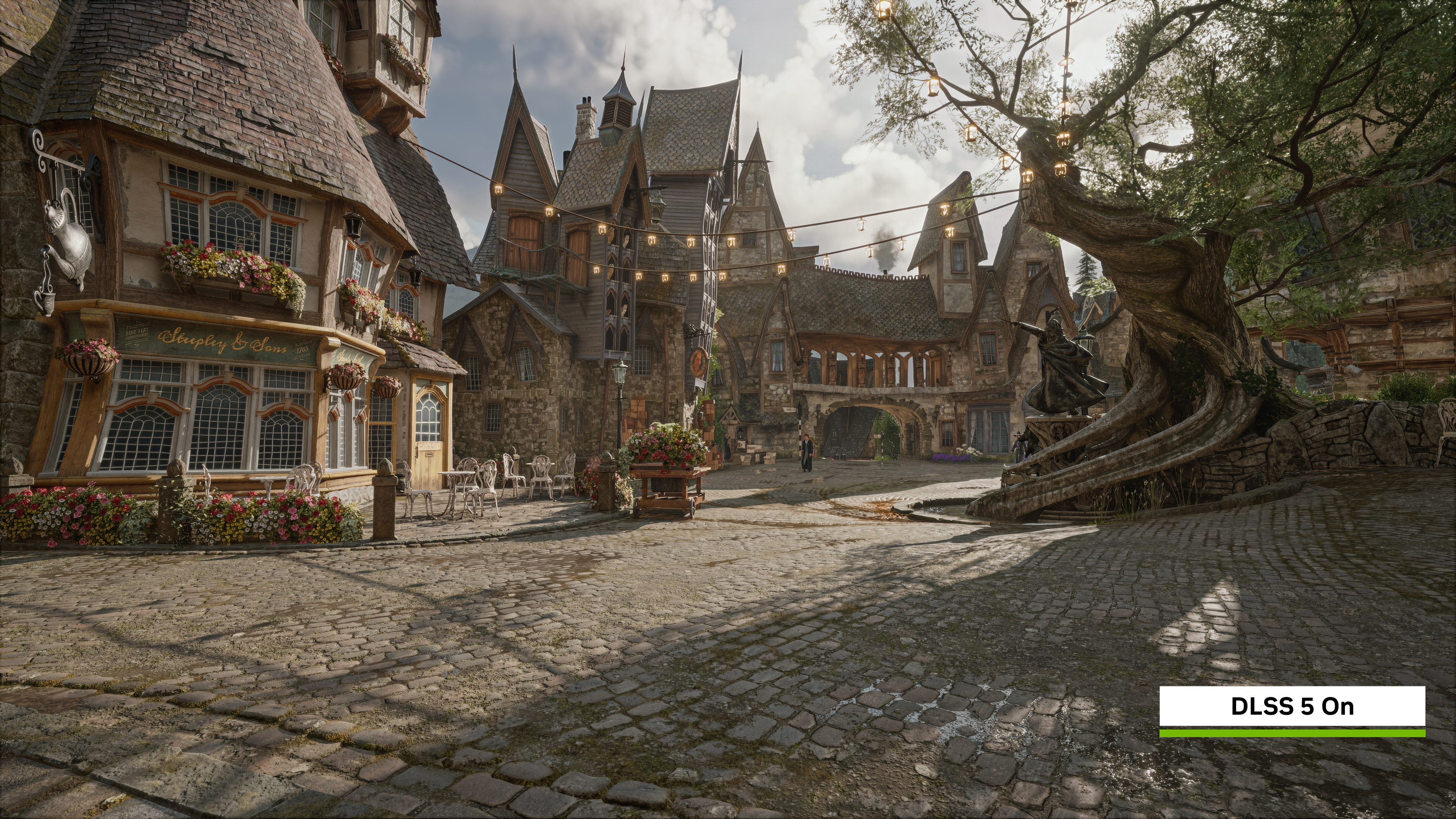
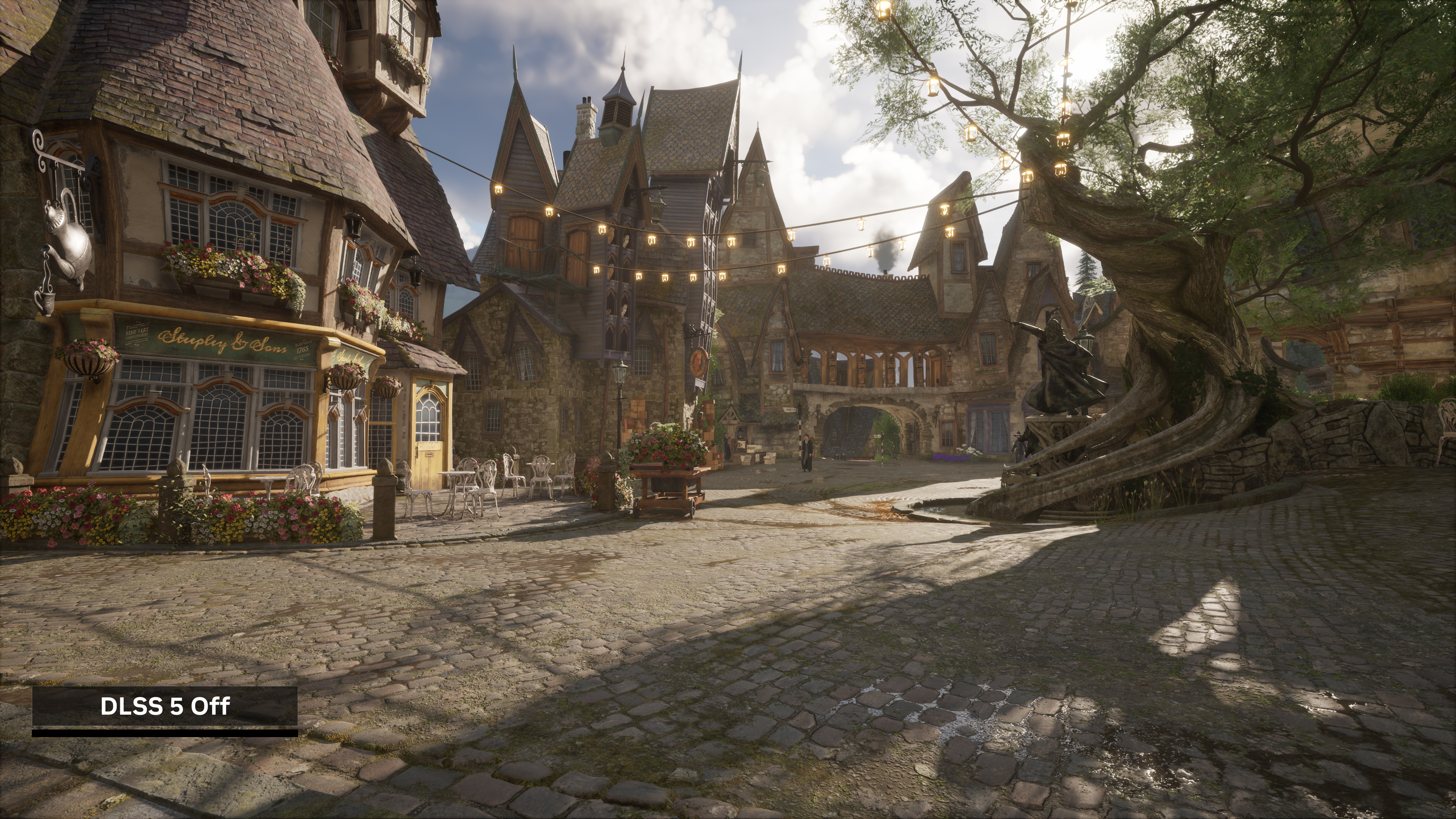
Click here to load a fullscreen 4K comparison
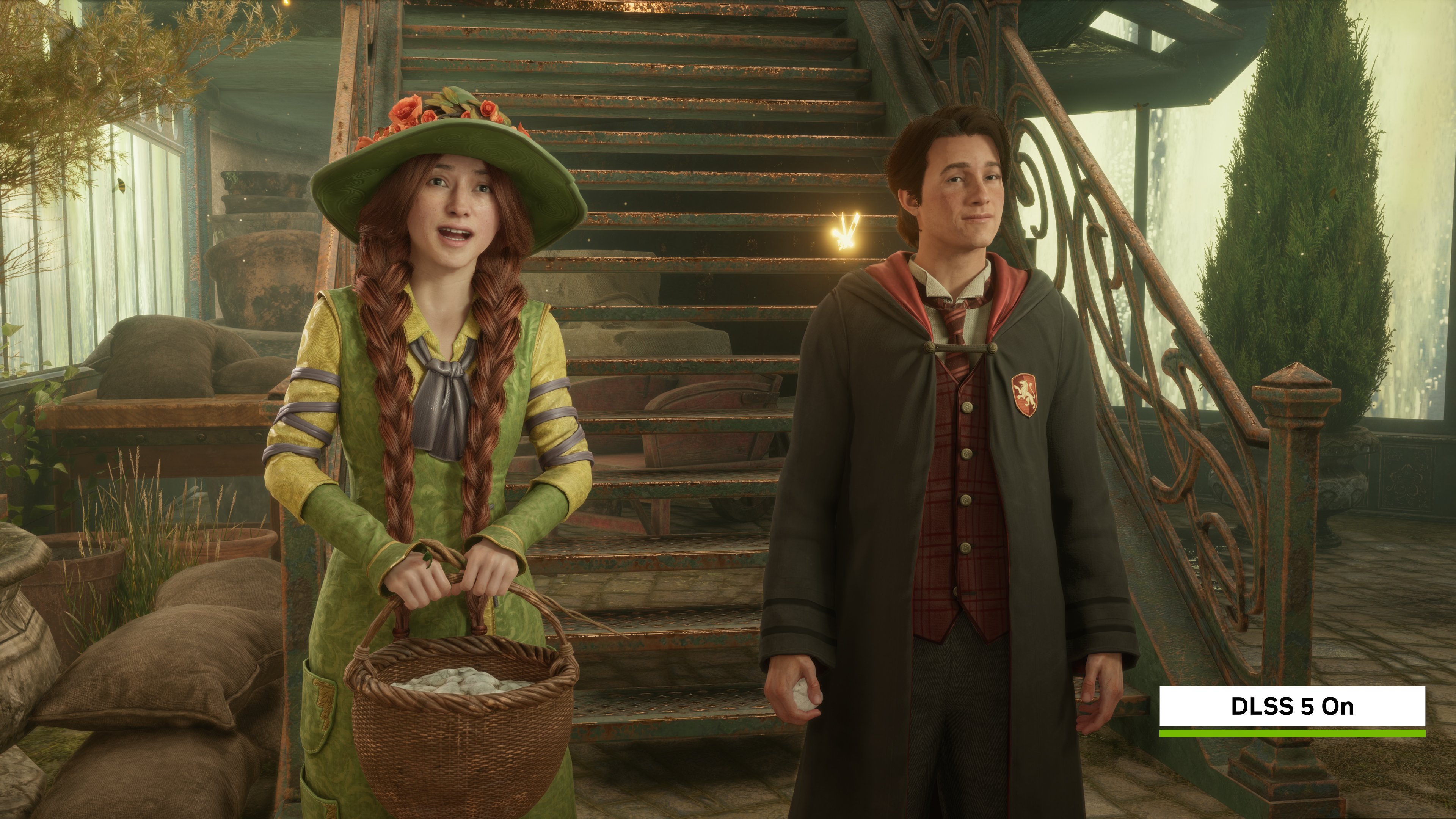
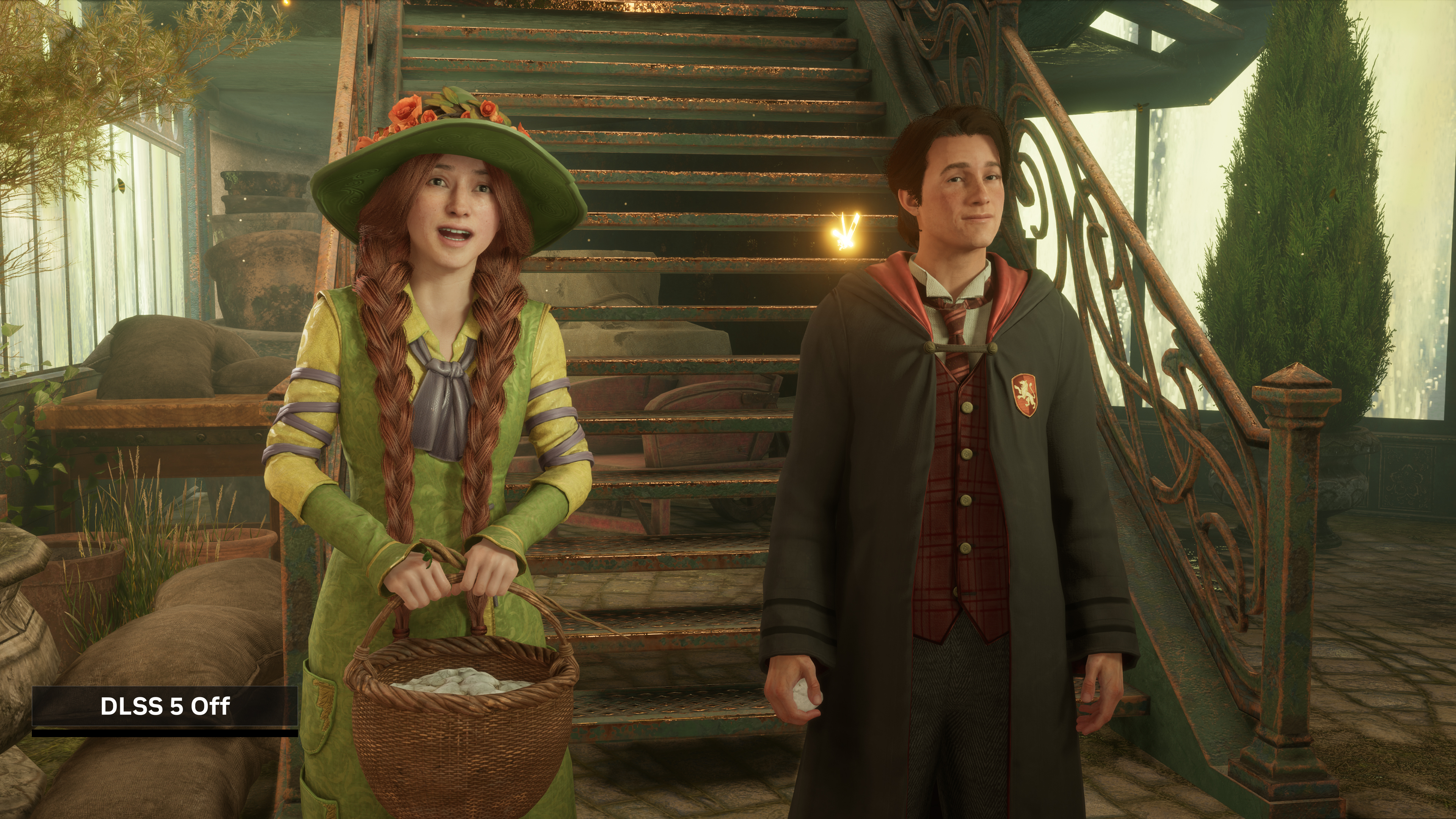
Click here to load a fullscreen 4K comparison
DLSS 5 Coming To Where Winds Meet
Where Winds Meet is a Wuxia open-world action-adventure RPG developed by Everstone Studio, offering a stunning open world, engaging action-adventure gameplay, deep RPG progression, and long-term free live-service updates for players. It has more than 100 million players worldwide and has reached a peak of over 250,000 concurrent players on Steam, currently holding a Steam rating of Very Positive (with over 116,000 reviews and still climbing).
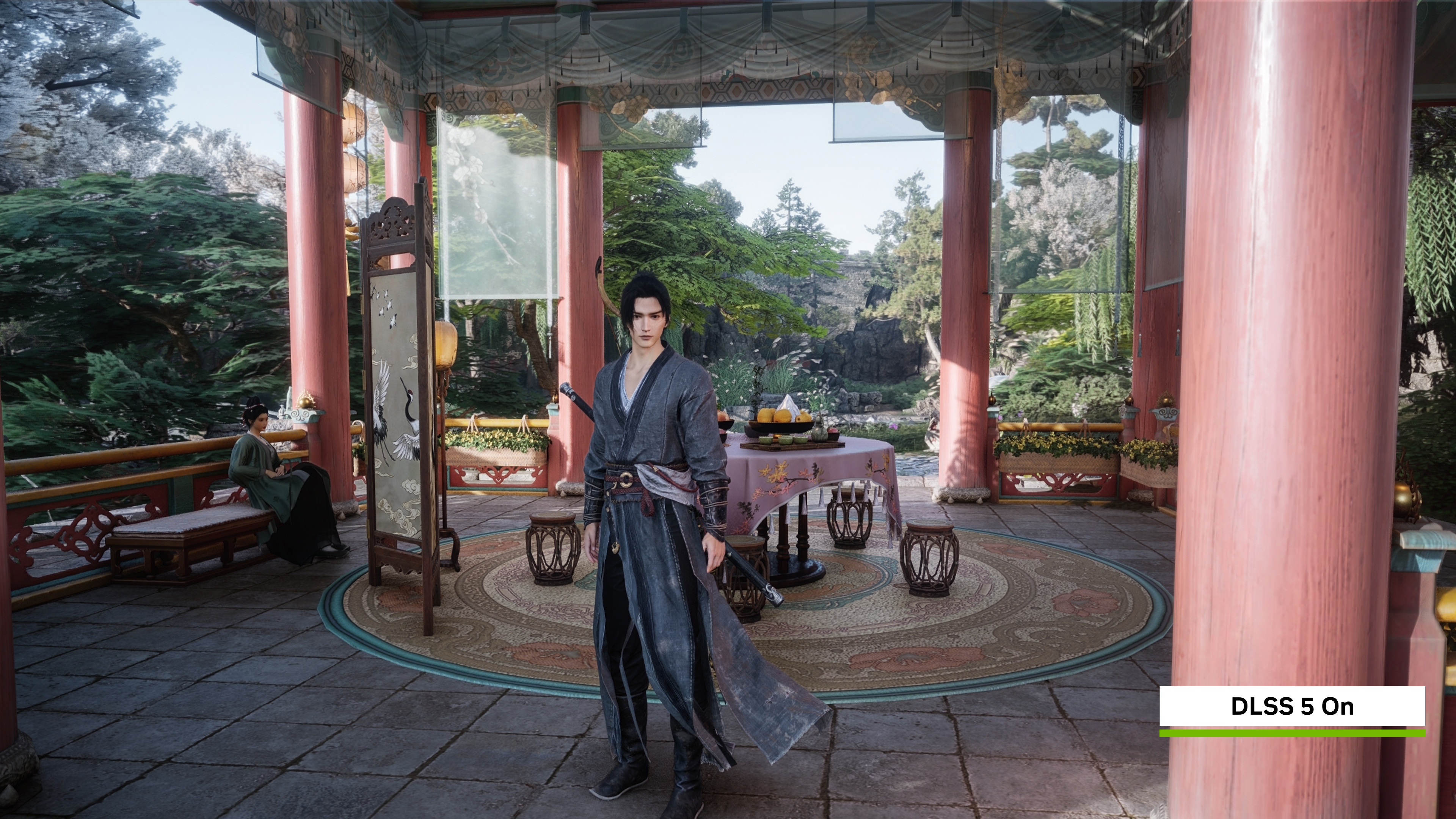
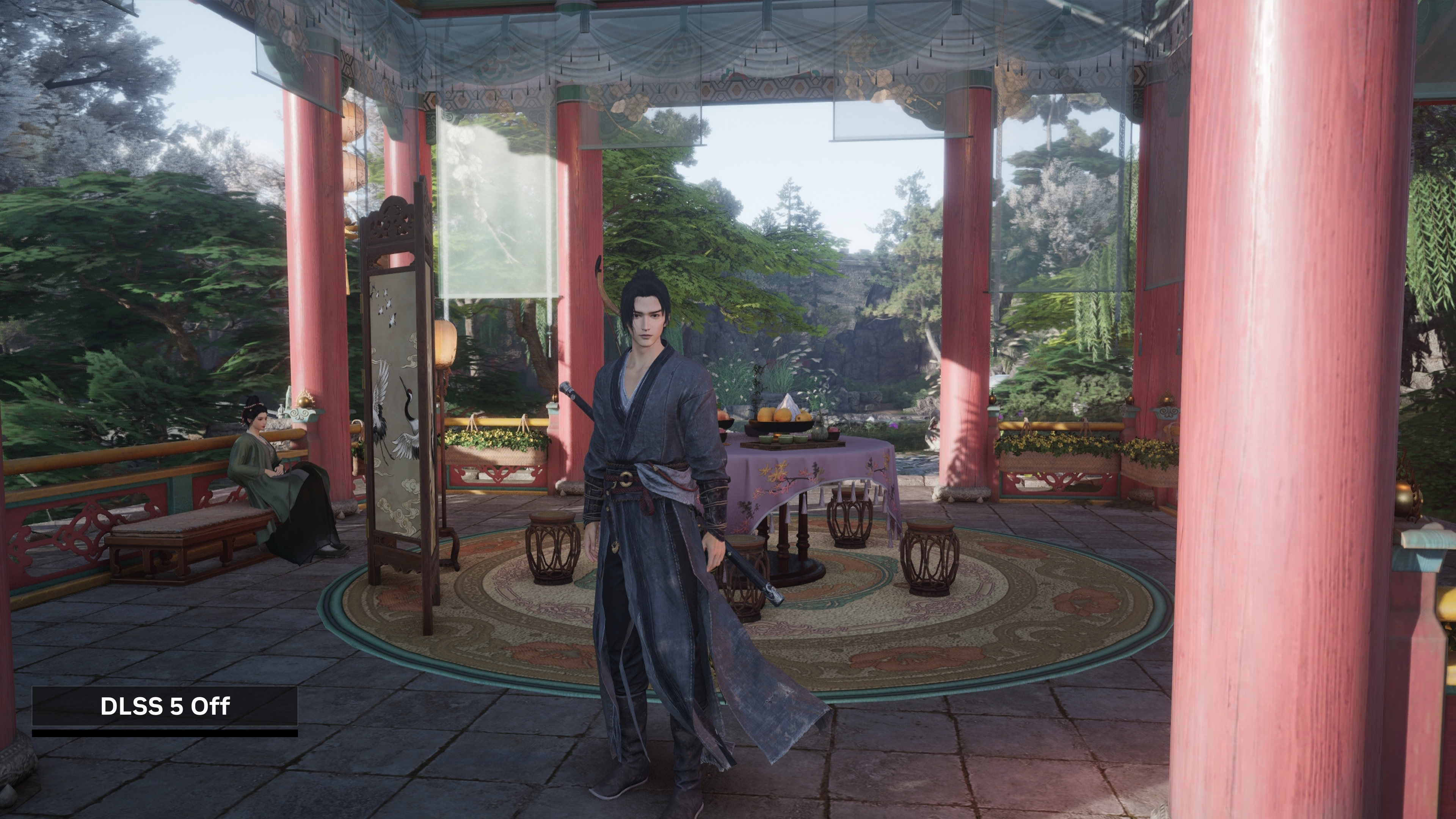
Where Winds Meet includes support for DLSS Multi Frame Generation and Super Resolution, and in the near future support for DLSS 3D-Guided Neural Rendering will be introduced, further enhancing its world and characters. There was a ton of community demand for official support, and the developers were equally impressed with the visual upgrade to the game.

Where Winds Meet’s DLSS 5 upgrade is coming in late November. Stay tuned to GeForce.com for updates.
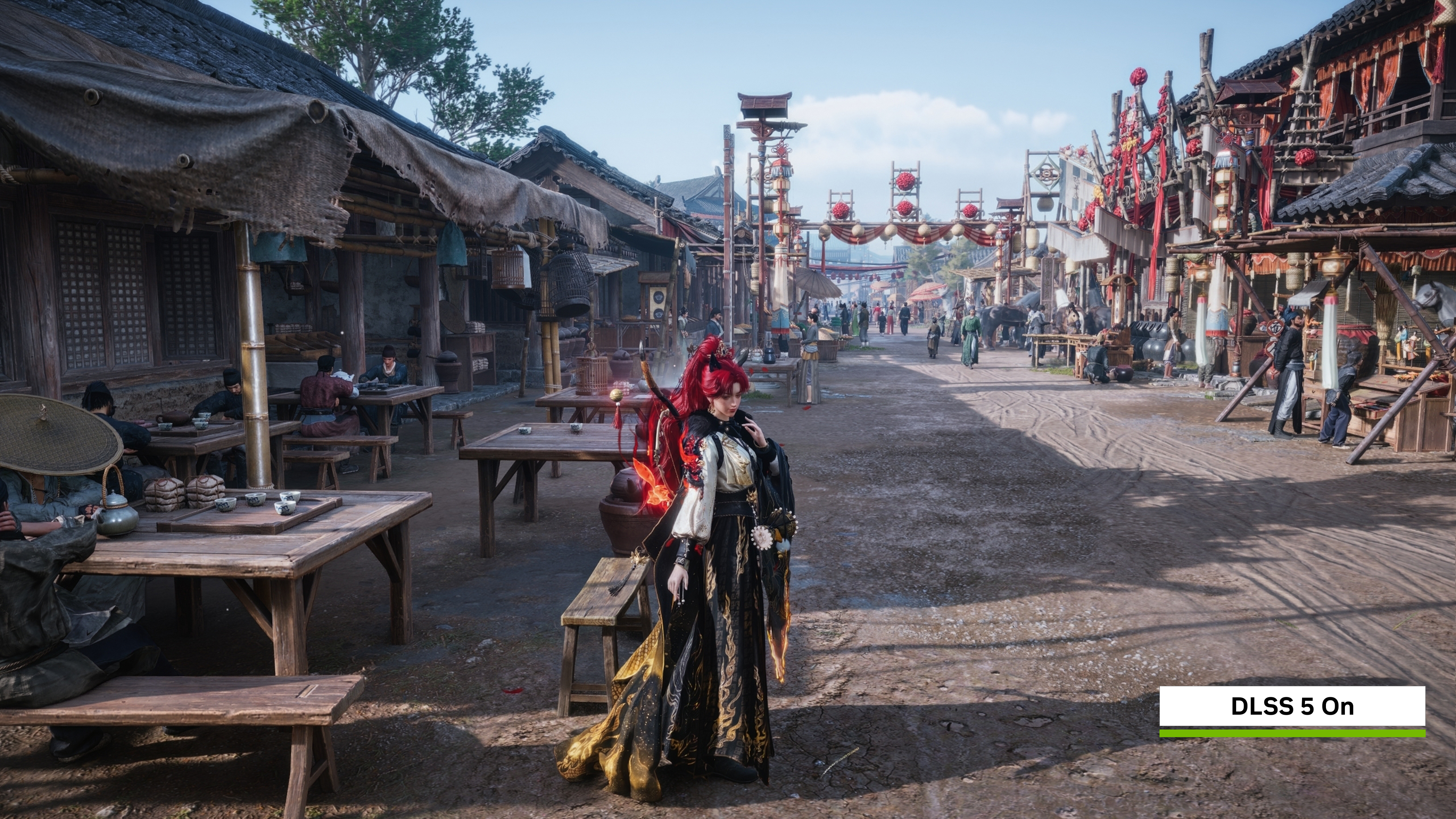
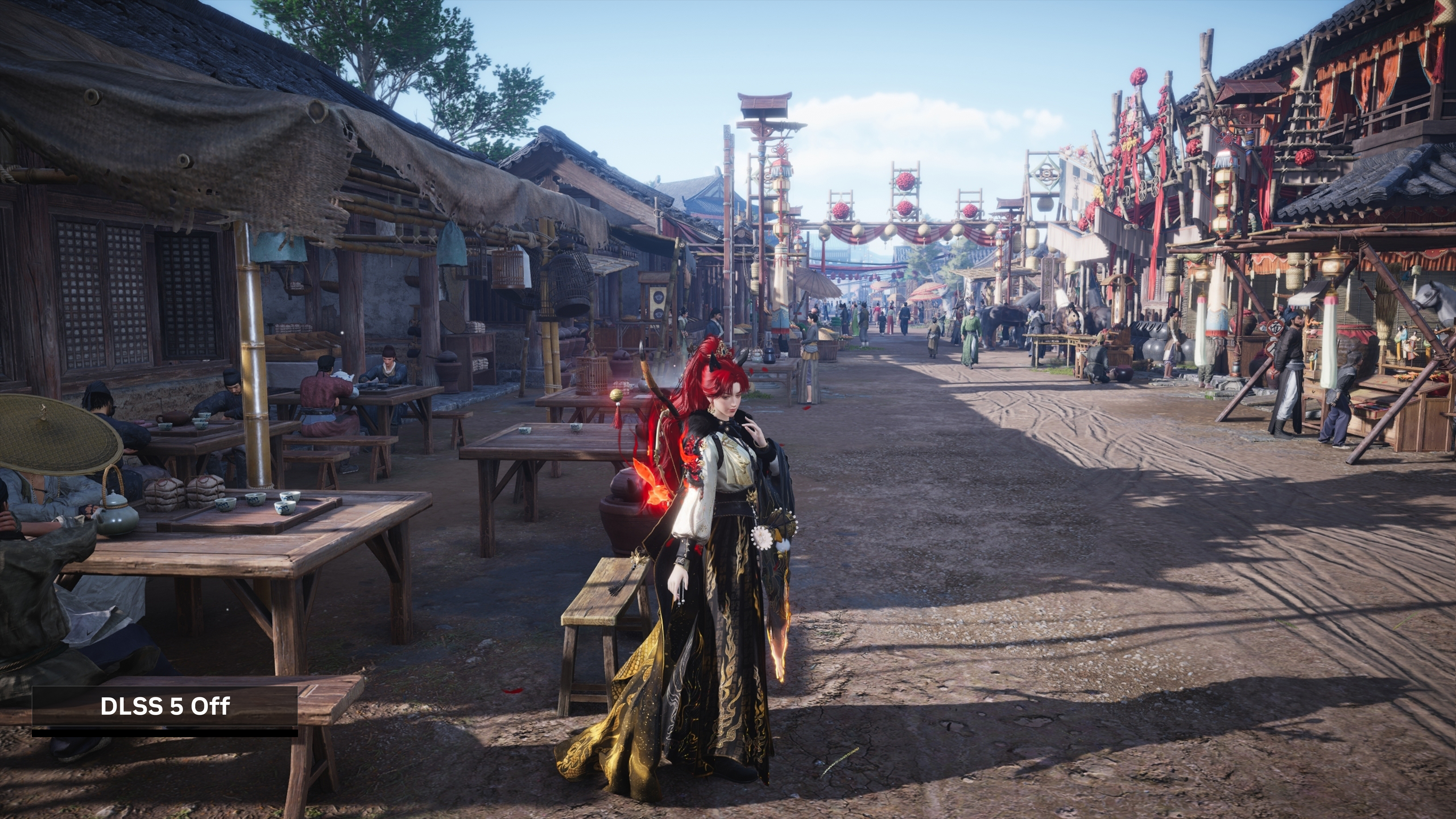
Click here to load a fullscreen 4K comparison
Click here to load a fullscreen 4K comparison
New, Faster Performance Mode For Frame Generation Enters Beta
Today, via a new NVIDIA app beta update, we’re introducing a new faster Performance Mode for Frame Generation, for GeForce RTX 40 Series and GeForce RTX 50 Series GPUs, and RTX Spark laptops.
DLSS Multi Frame Generation and Frame Generation utilize two AI models, one that leverages game data such as motion vectors and depth to understand object motion between the two rendered frames, and a second model to calculate optical flow for elements like UI or ray-traced effects.
Labeled “Preset C,” in the NVIDIA app’s Frame Generation override, this new Performance Mode replaces the second AI model with a faster and lighter algorithm to boost frame rates for DLSS Frame Generation, Multi Frame Generation, and Dynamic Multi Frame Generation, with minor trade-offs in image quality. On a GeForce RTX 5060, this Performance Mode for Frame Generation is up to 35% faster.
To apply Preset C to your games:
- Download and install our newest NVIDIA app update via our website, or from inside the app itself
- Open the app, and in Settings --> About, tick “Opt in to access Beta or experimental features”
- Wait a moment for the beta update to download, then click the on-screen message to install
- Once installed, open the “Graphics” section of the new NVIDIA app beta and select a supported Frame Generation, Multi Frame Generation or Dynamic Frame Generation game (alternatively, select “Global Settings” at the top of the window and apply to every supported game in your library)
- Scroll to “Driver Settings”
- Click “DLSS Override - Model Presets”
- Click “Custom”
- Open the “Frame Generation” drop-down and choose “Preset C” (if Preset C isn’t visible, please reboot your system)
- Click “Apply”

DLSS 5 Update For RTX Remix Launching October 23rd
Classic PC games are remembered for their incredible stories, characters and gameplay, but dated visuals can make them tough for modern players to enjoy. NVIDIA RTX Remix changes that. Built for RTX PCs, our modding platform uses cutting-edge path tracing, accelerated by DLSS, to reimagine timeless titles, letting longtime fans and a new generation experience era-defining games in stunning detail.
On October 23rd, we’re adding DLSS 5 with the new, faster 3D-Guided Neural Rendering model, and the faster Performance Mode for Frame Generation to RTX Remix, giving modders even more options and tools for remastering classic games.
To demonstrate the possibilities of DLSS 5 in RTX Remix, we shared a preview version with select modders, asking them to put its new capabilities to the test.
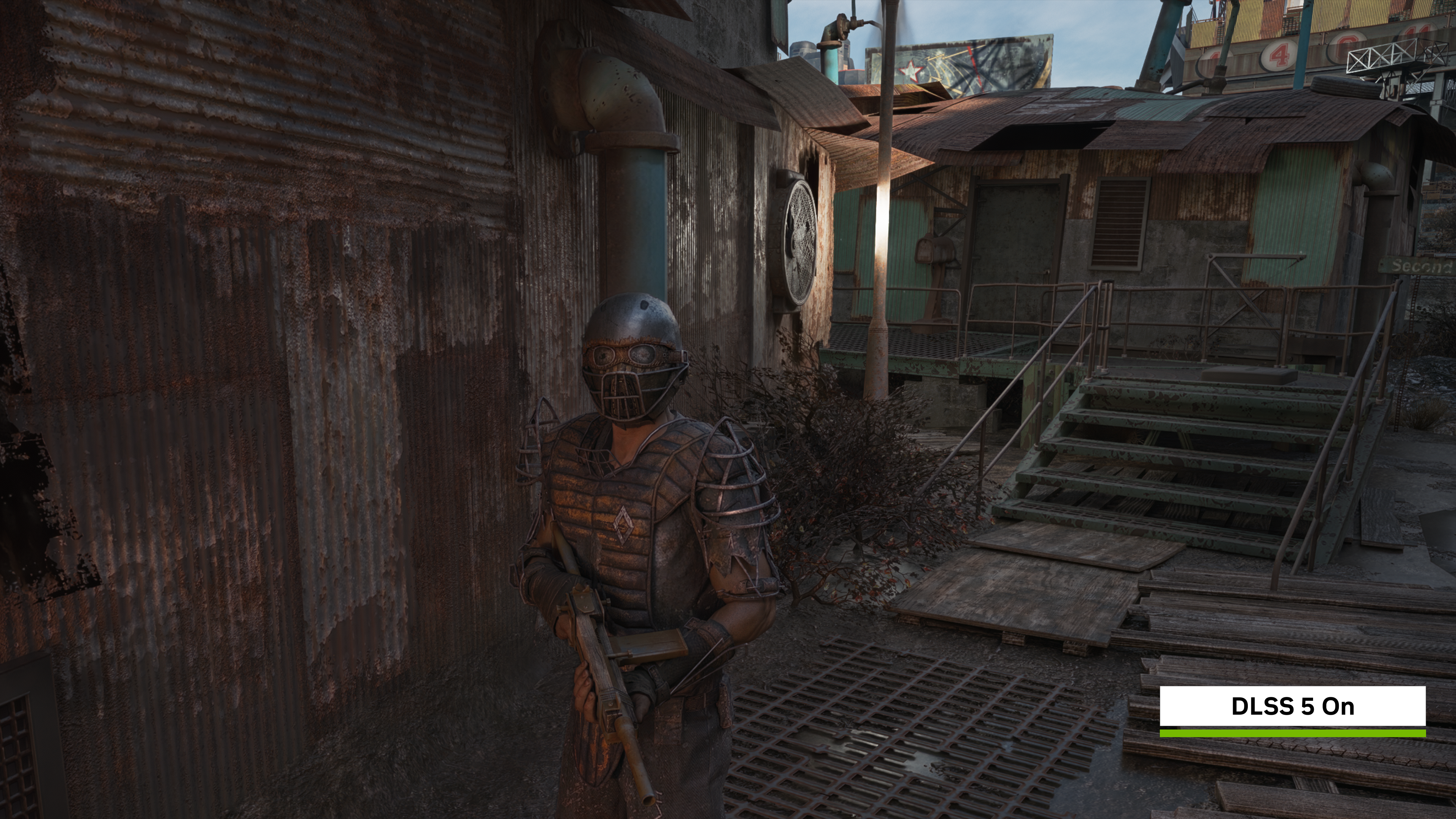
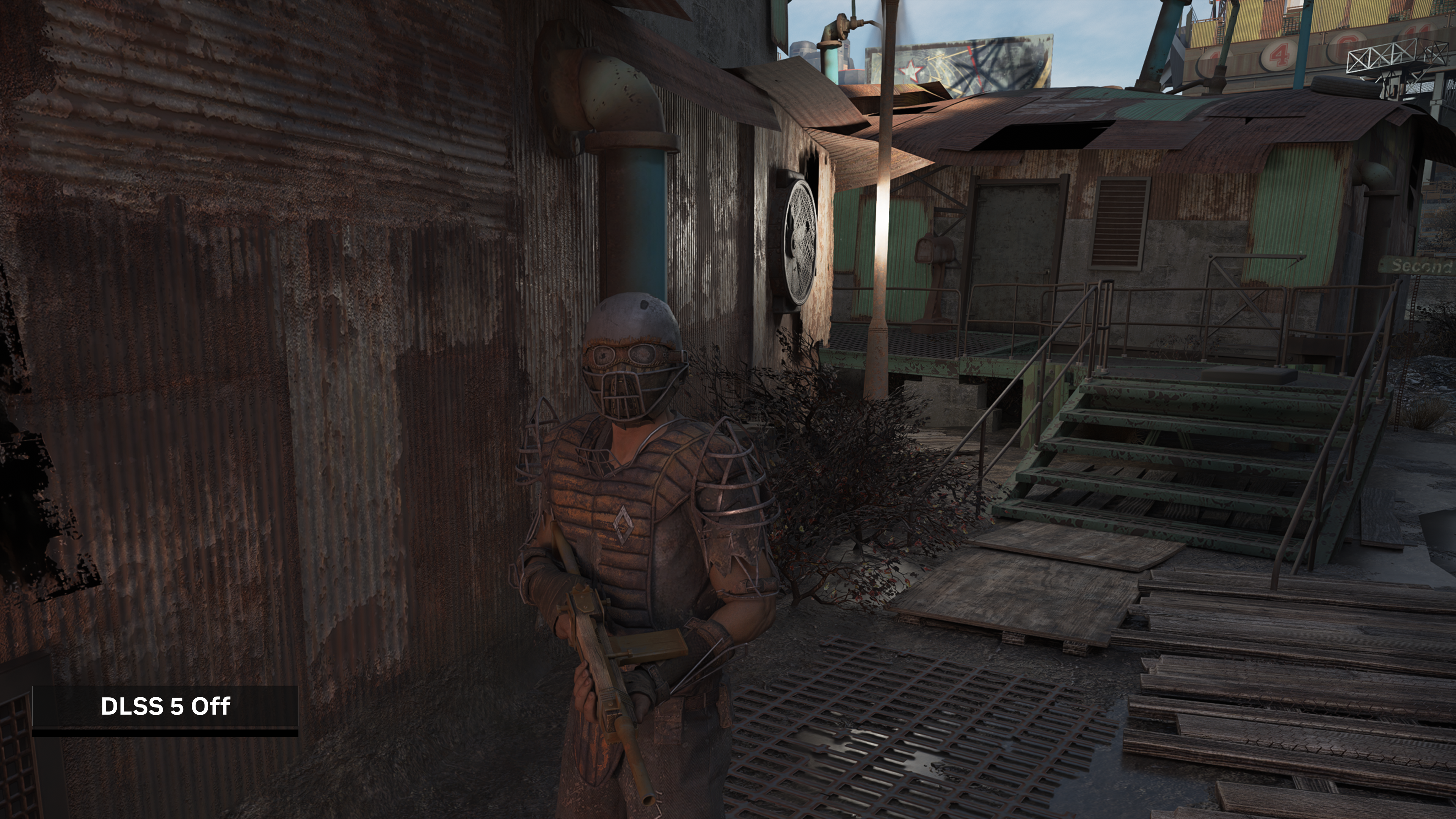
Sparkles/Kim2091 enhanced their in-development Fallout 4 RTX project with DLSS 5. In the following comparison, the soldier’s helmet has better reflections and lighting response when DLSS 5 is enabled. Additionally, his neck has better shadowing and his clothes have greater depth and material detail.
Click here to load a fullscreen 4K comparison
SoftSoundd enhanced their in-development Mirror’s Edge RTX project with DLSS 5. With it enabled, there are improved contact shadows and better ambient occlusion on Faith’s hand and pants, and better lighting response around the zip line, adding even more realism to the path tracing output.
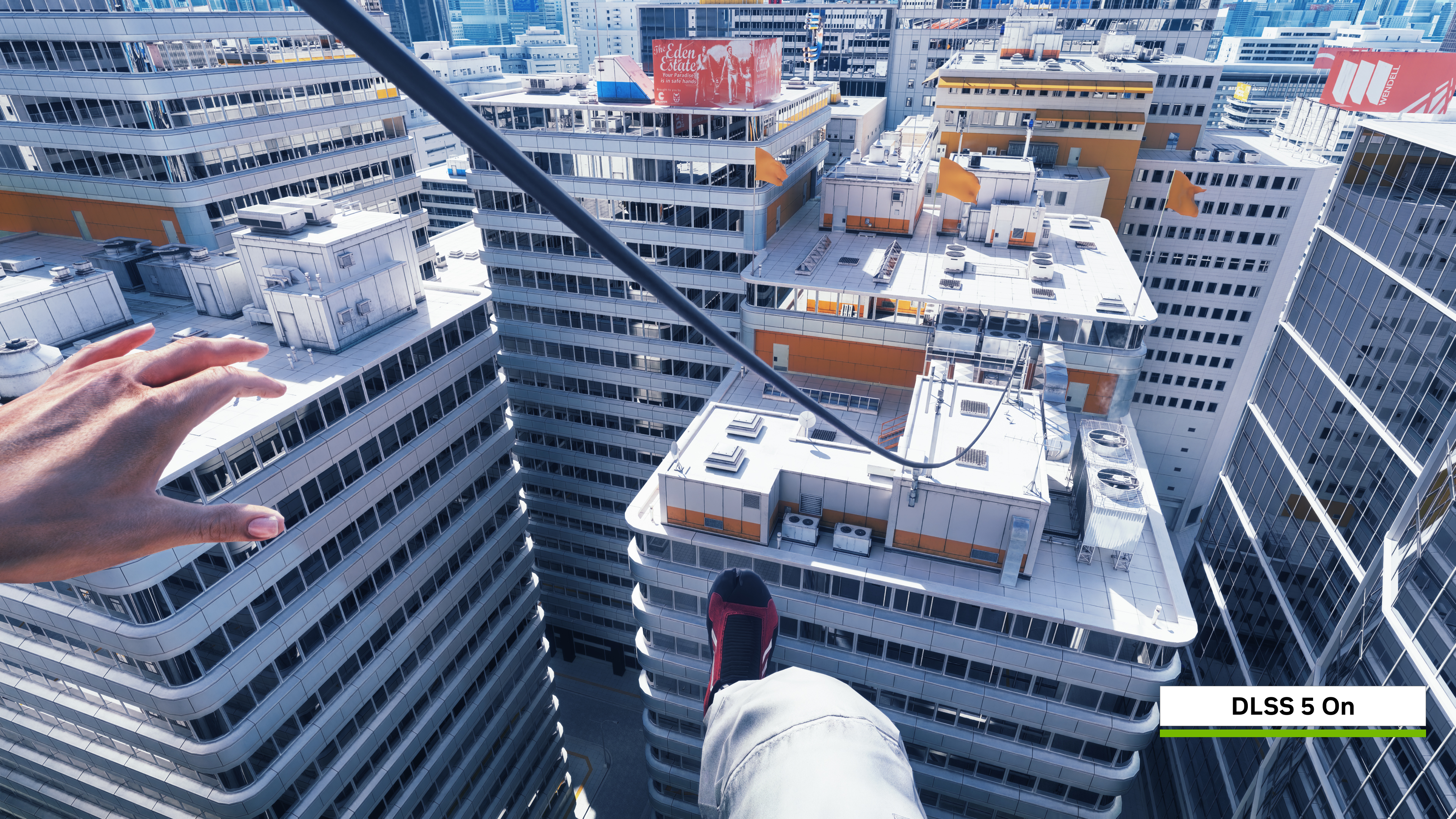
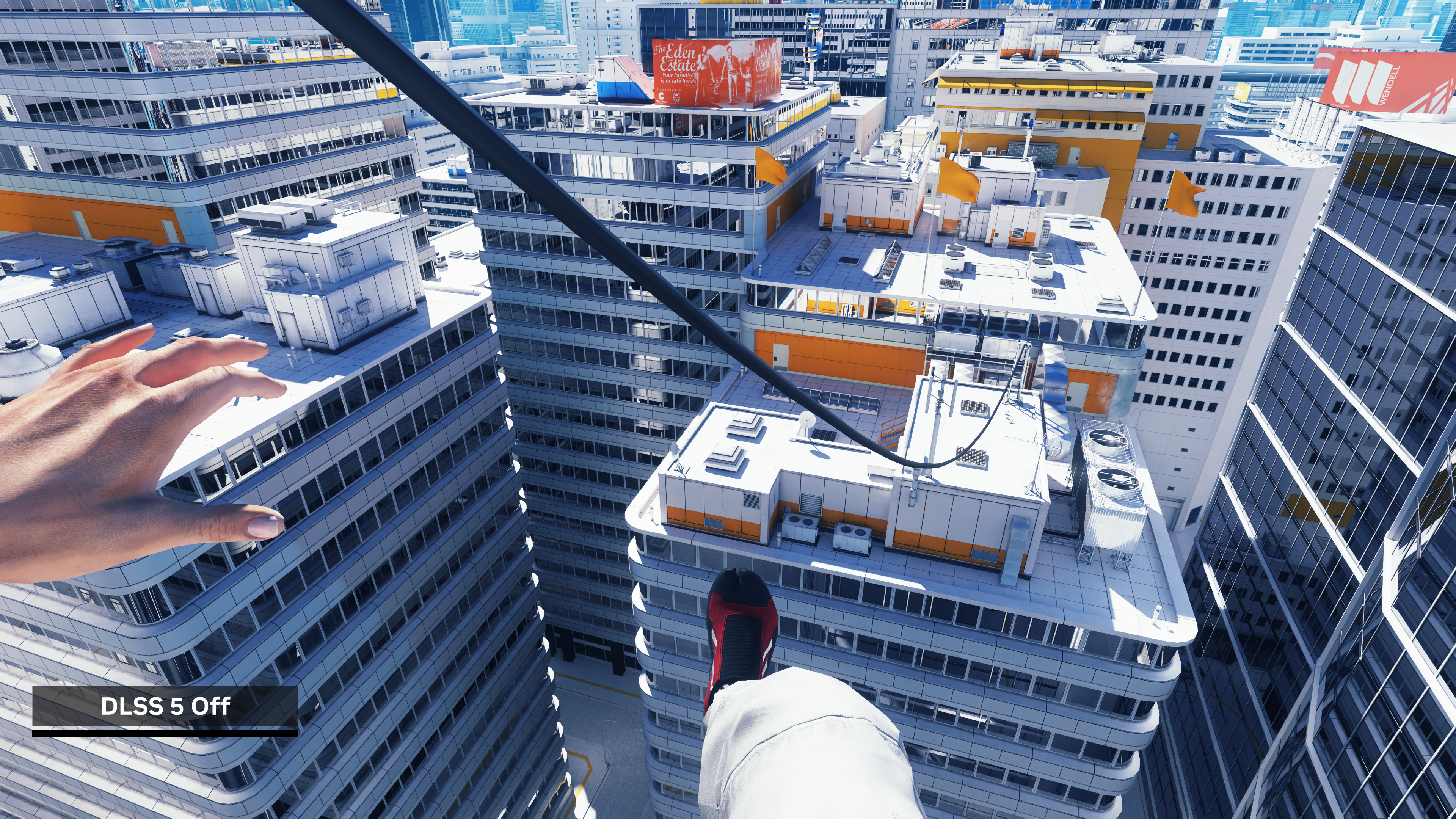
Click here to load a fullscreen 4K comparison
To use DLSS 5 with 3D-Guided Neural Rendering and Frame Generation with Performance Mode in RTX Remix on October 23rd, download the latest version NVIDIA RTX Remix from the Home screen of the NVIDIA app, or GitHub, press Alt + X on your keyboard to launch the NVIDIA RTX Remix Runtime User Guide overlay, and click on the Developer Settings Menu option inside the interface. Then, enable DLSS 5 in the runtime or toolkit menu as seen below.
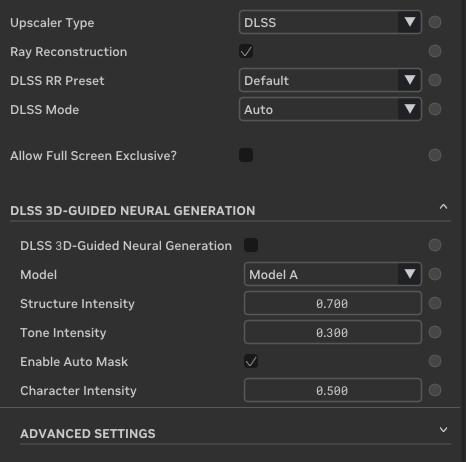
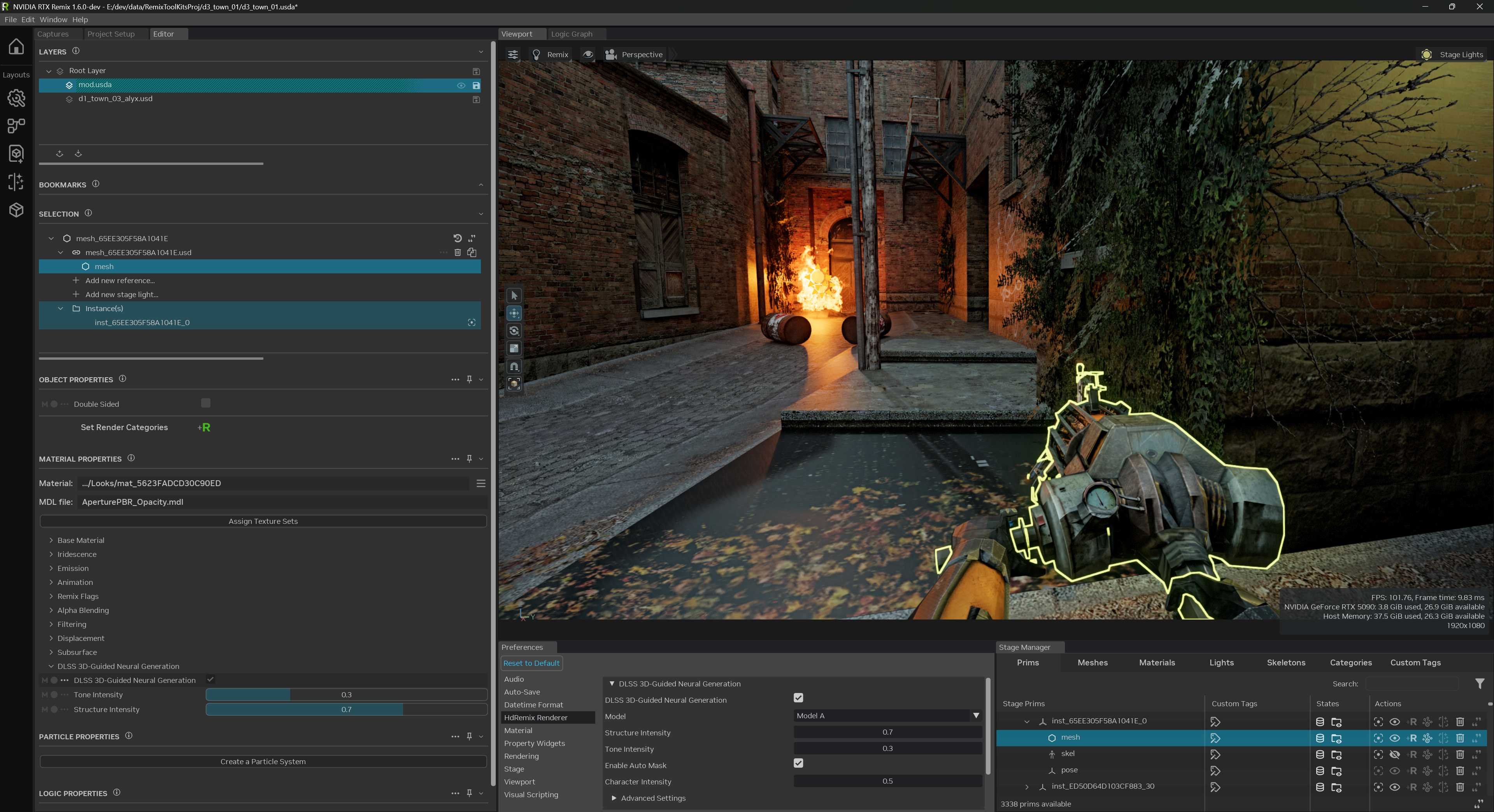
DLSS 5 UI in the RTX Remix Toolkit
Modders have access to the same controls as developers, enabling them to include and exclude content from DLSS 5’s remit, to mask specific elements of scenes, and specify on a per object basis which DLSS 5 preset should be used and how the content should be affected. For further details, check out our DLSS 5 launch article.
Stay Tuned For Future DLSS Enhancements
DLSS accelerates performance and enhances image quality in over 1,000 games and apps, and we remain committed to further improving your experiences through the power of AI rendering.
Stay tuned to GeForce.com to learn what’s next for DLSS.