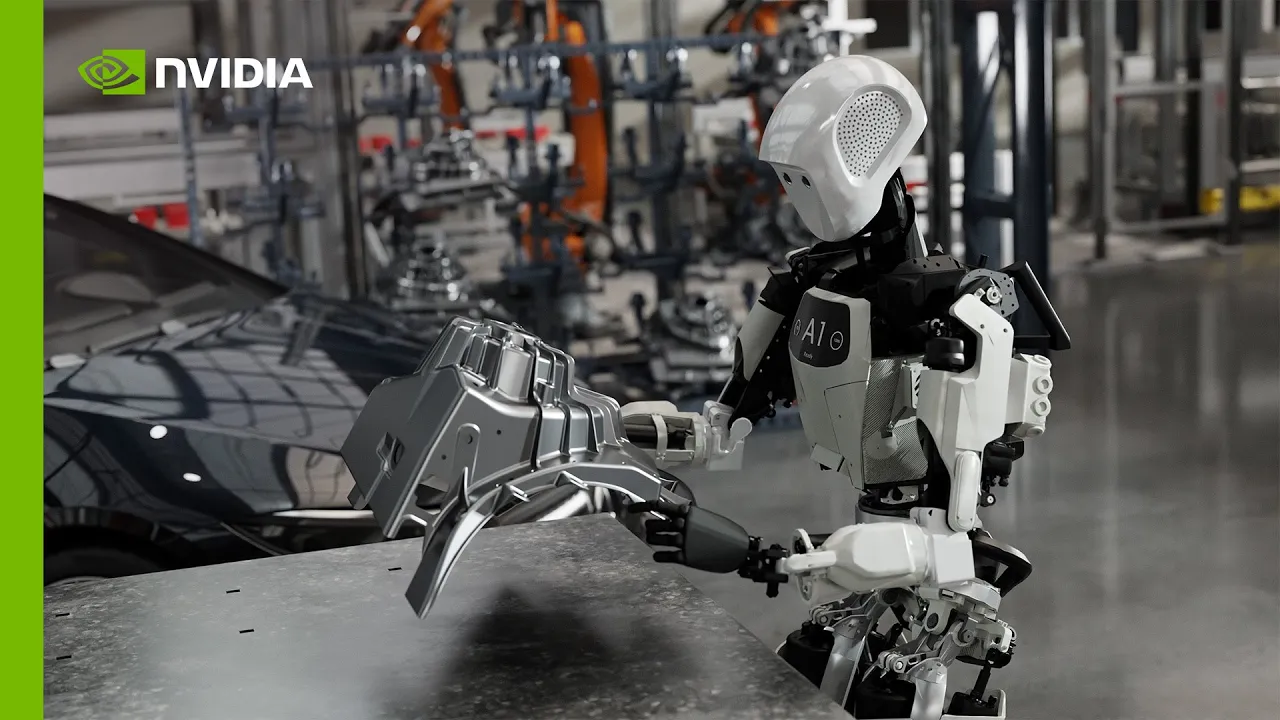
General-purpose humanoid robots are designed to adapt to human-centric urban and industrial workspaces, tackling tedious, repetitive, or physically demanding tasks. They’re increasingly being used in factories and healthcare facilities to assist humans and alleviate labor shortages.

Advancing Automation With NVIDIA Robotics
Build smarter, safer robots with NVIDIA’s open models, frameworks, and libraries.
Introduction How is AI Reshaping Robotics?
Physical AI is the next frontier in AI, bringing intelligence out of the screen and into the real world. It lets robots and autonomous systems perceive, reason, learn, and act safely in dynamic environments.
NVIDIA Robotics combines open models, open simulation frameworks, GPU-accelerated libraries, and the three-computer solution to help developers build, simulate, test, and deploy AI-powered robotic systems faster, from cloud to edge.
Use Cases
Discover AI for Robotics
Humanoid Robots
Accelerate the development of advanced AI robotics.
Robot Safety
Build functional safety AI agents for industrial robots to ensure efficient, compliant operations.
Industrial Facility Digital Twins
Develop advanced, generative AI-enabled virtual facility solutions.
Synthetic Data Generation
Accelerate development of physical and agentic AI workflows.
AI-Powered Multi-Camera Tracking
Create unified, intelligent visibility across large spaces.
Robot Learning
Train robot policies in simulation.
Success Stories
What’s the Real-World Impact of AI?
Learn how AI-powered robots and accelerated computing are enhancing autonomy, boosting efficiency, and lowering operational costs.


Technology
AI for Robotics—From Simulation to Real, Cloud to Edge
Learn about the NVIDIA Robotics platform for robotics and vision AI.


Ecosystem
NVIDIA Robotics Partners and Ecosystem
ROS Ecosystem
NVIDIA Isaac ROS is built on the open-source ROS 2™ (Robot Operating System) software framework. This means the millions of developers in the ROS community can easily take advantage of NVIDIA-accelerated libraries and AI models to accelerate their AI robot development and deployment workflows.
NVIDIA Jetson™ Partner Network
Discover a large community of partners that can help you build your full robot system with products ranging from specialized boards to AI software to application design services to sensors and developer tools.
Resources
Explore NVIDIA Robotics
-
Blogs
-
Videos
-
Community


Frequently Asked Questions About NVIDIA Robotics Solutions
Physical AI enables robots and autonomous systems to perceive, reason, learn, and act in the physical world. NVIDIA supports physical AI development with AI models, simulation frameworks, accelerated libraries, and computing platforms spanning training, simulation, and real-time deployment.
NVIDIA Isaac™ is an open robotics development platform that includes simulation and robot-learning frameworks, NVIDIA CUDA™-accelerated libraries, AI models, and reference workflows. It supports the development of autonomous mobile robots, robotic arms, manipulators, and humanoids.
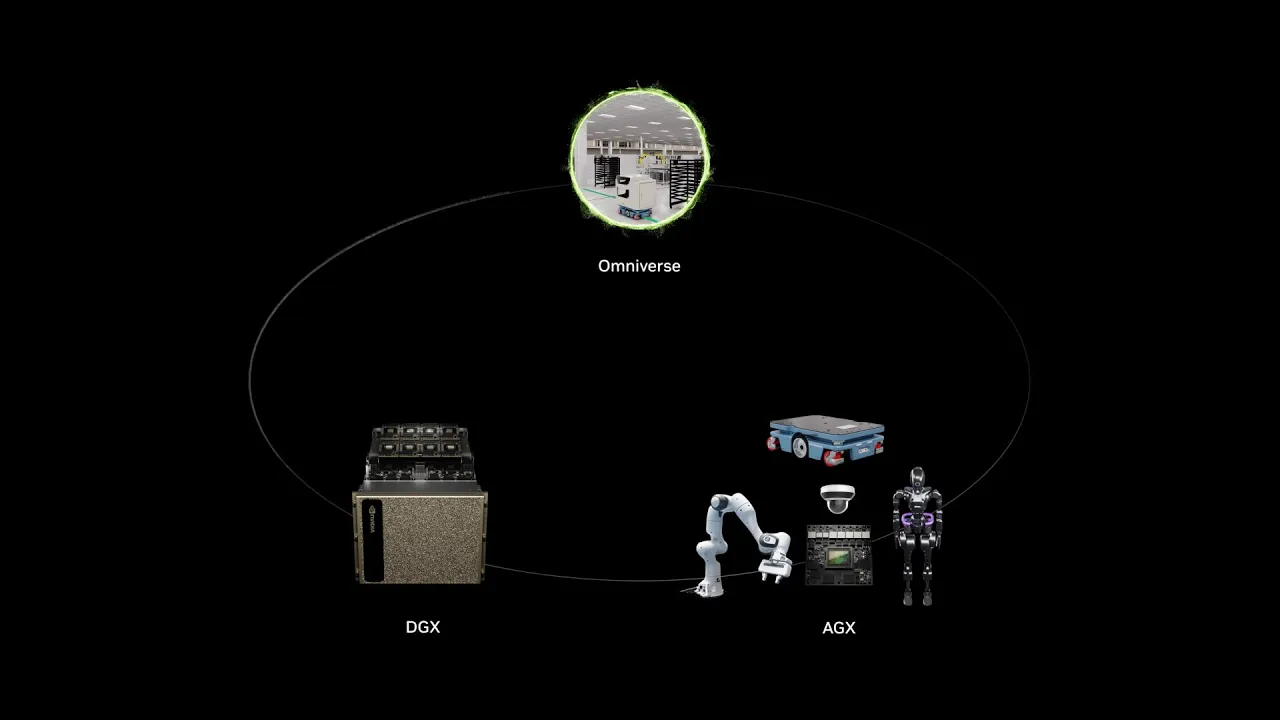
This solution uses NVIDIA DGX™ systems for AI training, NVIDIA Omniverse™ and Cosmos™ on RTX PRO™ Servers for simulation, and NVIDIA Jetson AGX™ systems for real-time inference and control. Together, these platforms support robotics development from model training through real-world deployment.
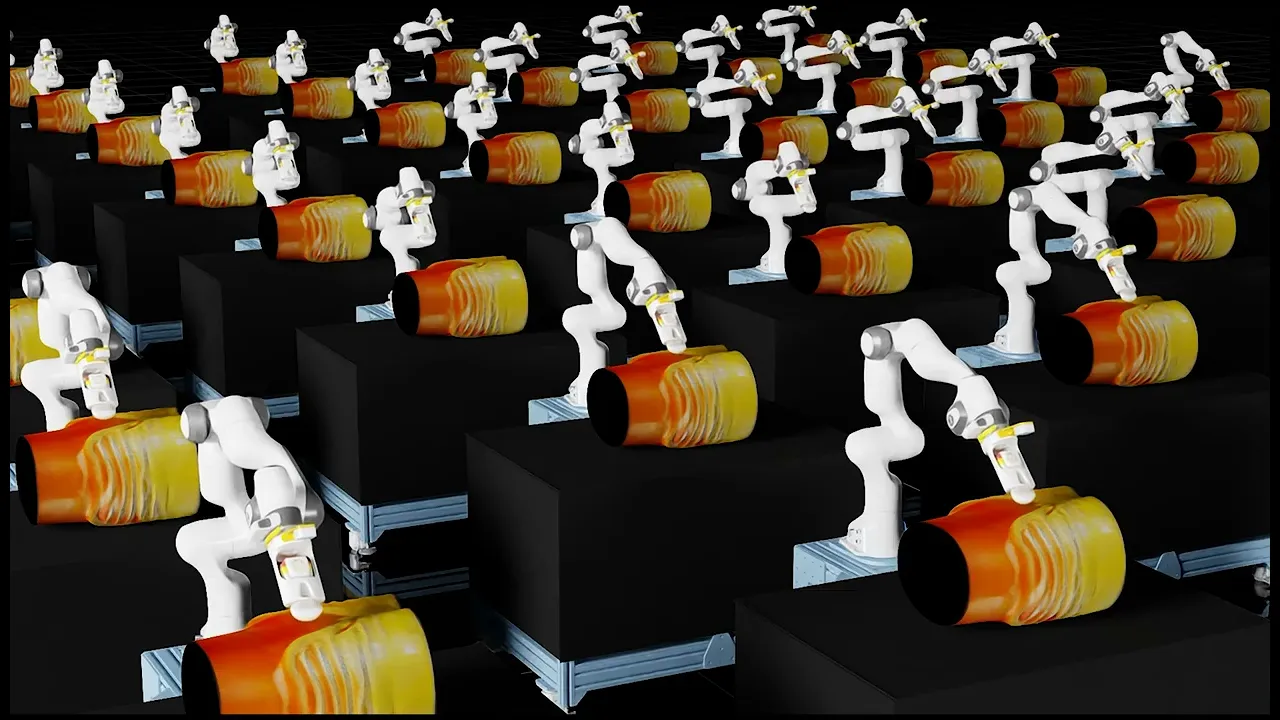
Simulation allows robot systems to be trained, tested, and validated in physically based virtual environments before deployment. Synthetic data supplements real-world data, helping address data scarcity and expand the range of environments and scenarios used for training.
Isaac Sim provides physically based simulation, rendering, and virtual robot and sensor models. Isaac Lab adds reusable environments and workflows for training and evaluating robot policies using reinforcement learning, demonstrations, and other robot-learning methods.
Yes. NVIDIA Isaac ROS is built on ROS 2 and provides CUDA-accelerated packages and AI models for capabilities such as perception, navigation, object detection, collision detection, and trajectory optimization. It can run on workstations and embedded NVIDIA Jetson systems.
Start with NVIDIA Isaac to identify the frameworks, models, and workflows that match the robot being developed. Isaac Sim supports virtual development and testing, Isaac Lab supports robot learning, Isaac ROS supports accelerated ROS 2 applications, and Jetson supports real-time edge deployment.
Next Steps
Ready to Get Started?
Create autonomous mobile robots (AMRs), arms and manipulators, humanoids, and more with the NVIDIA Isaac platform.
Stay up to Date on NVIDIA News
Get the latest robotics news, technologies, breakthroughs, and more sent straight to your inbox.