What Is Computer-Aided Engineering?
Computer-aided engineering is used early in the product development cycle to model and simulate complex physical behaviors such as fluid flow, structural stress, vibration, heat transfer, electromagnetics, and more. Automotive, aerospace, heavy equipment, semiconductor chip design, energy, manufacturing, and consumer goods companies can apply CAE to design safer vehicles, efficient aircrafts and turbines, and more reliable electronic devices while reducing the number of costly physical prototypes.
What Is Computer-Aided Engineering Used For?
Computer-aided engineering is used early in the product development cycle to model and simulate complex physical behaviors such as fluid flow, structural stress, vibration, heat transfer, electromagnetics, and more. Automotive, aerospace, heavy equipment, semiconductor chip design, energy, manufacturing, and consumer goods companies can apply CAE to design safer vehicles, efficient aircrafts and turbines, and more reliable electronic devices while reducing the number of costly physical prototypes.
In many organizations, CAE underpins simulation-driven design, where engineers iterate on virtual prototypes to meet accuracy, performance, sustainability, and regulatory targets before building physical systems.
How Does Computer-Aided Engineering Work?
Computer-aided engineering workflows combine physics-based solvers and numerical methods — and, increasingly, AI-physics models and agentic engineering — to solve large-scale mathematical systems that describe physical phenomena.
How it’s used in practice:
- Preprocessing: Engineers start from a 3D model of a component or system, then generate a computational mesh and specify materials, boundary conditions, and operating scenarios.
- Solving: CAE software formulates governing equations — often partial differential equations — and uses linear and nonlinear solvers to approximate fields such as pressure, temperature, stress, or electromagnetic intensity across the mesh.
- Acceleration With NVIDIA CUDA-X™ Libraries: GPU-accelerated libraries like NVIDIA cuDSS, cuBLAS, cuSOLVER, cuSPARSE, and AmgX accelerate solvers to deliver optimal GPU performance and significant speedups.
- AI Physics and Agentic Engineering Integration: Frameworks such as NVIDIA PhysicsNeMo and NVIDIA Warp and AI physics open models help developers build AI surrogate models and simulation kernels that run efficiently on GPUs, enabling fast data generation and physics-informed learning. NVIDIA Nemotron™ can also guide generate agentic engineering solutions to ISVs and end customers.
- Digital Twins: Digital twin platforms like NVIDIA Omniverse™ use these solvers and AI-physics models to create real-time, interactive virtual replicas of products and systems, so engineers can change design parameters and immediately see the impact on key performance indicators.
Developers can use blueprints like the NVIDIA Omniverse Blueprint for interactive fluid simulation to build real-time digital twins that combine CUDA-X accelerated solvers, AI-physics, and virtual environments. This blueprint allows leading software vendors and startups to create tools — such as real-time virtual wind tunnels — that enable engineers to visualize and analyze product performance instantly during the design phase.

Quick Links

The reference workflow for CAE includes data preprocessing, training, inference, and visualization
Applications and Use Cases of Computer-Aided Engineering
Computer-aided engineering supports a broad set of industrial and research applications that benefit from virtual testing and optimization. Below are some example applications:
What Are the Benefits of Accelerated Computer-Aided Engineering?
Accelerated Development Cycles
Computer-aided engineering helps engineering teams detect design issues earlier, reducing the number of physical prototypes and tests required and lowering overall development costs while maintaining accuracy.
Optimized Product Performance
By virtually exploring a wider design space, engineers can discover higher-performing and more energy-efficient designs that might be impractical to evaluate purely through physical experimentation.
Real-Time Simulation
GPU-accelerated solvers and AI-physics surrogates enable orders-of-magnitude speedups in simulation, which in turn support interactive what-if analyses and real-time digital twins for engineering workflows.
Streamlined Collaboration
Organizations benefit from improved collaboration and traceability, as CAE workflows maintain a digital thread connecting geometry, simulation data, and engineering decisions across the product lifecycle.
Challenges and Solutions
How Industry Leaders Are Leveraging Computer-Aided Engineering
From automotive to aerospace simulation, industry leaders are pioneering novel CAE use cases powered by NVIDIA accelerated computing and AI platforms.
Synopsys CAE Solutions With NVIDIA AI-Physics and AI Infrastructure

Ansys, part of Synopsys, leveraged NVIDIA AI physics and AI infrastructure to accelerate a broad range of CAE solvers, including Ansys Fluent and LS-DYNA — leading to 500x speedups in computational engineering. By integrating NVIDIA accelerated computing, AI physics open models, and Omniverse-powered digital twin capabilities, Ansys enabled customers to run larger, more accurate simulations faster and at a lower cost. This supports applications from aerodynamics and crash analysis to 6G communications and semiconductor design.
Cadence Reduces Simulation Time From Weeks to Hours
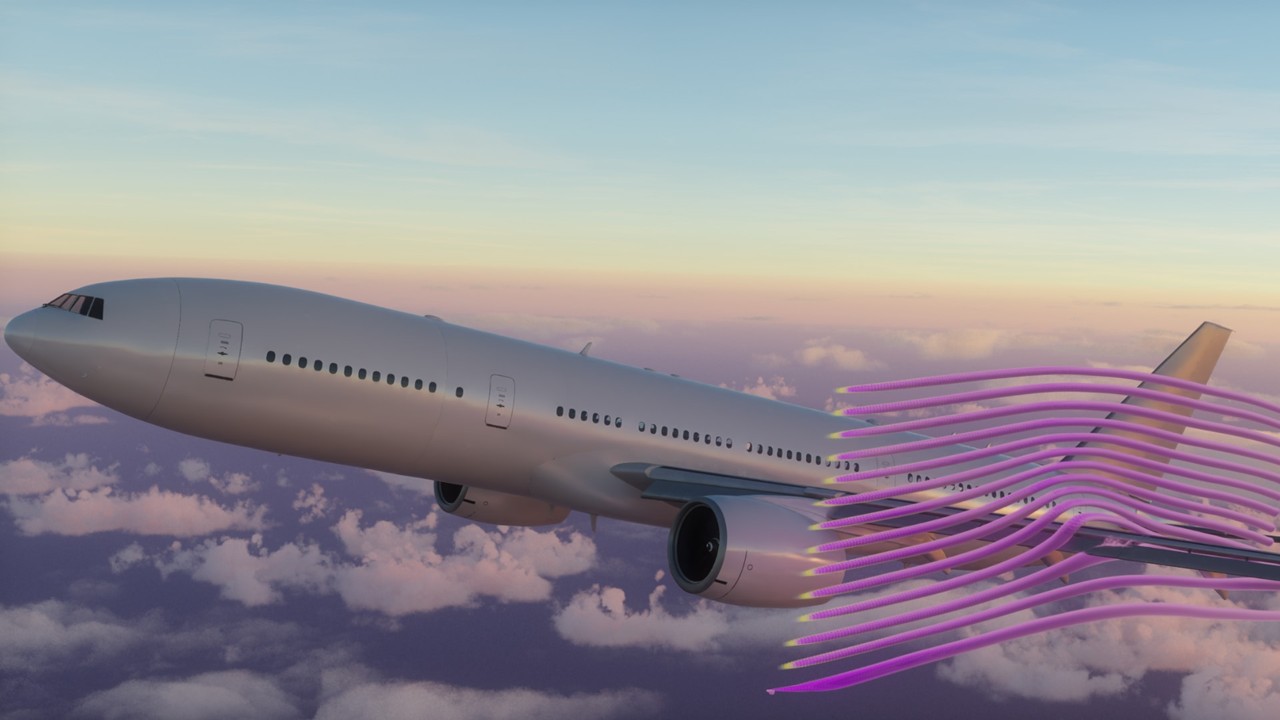
Cadence is using NVIDIA Grace Blackwell-accelerated systems to simulate entire flight journeys, from takeoff to landing. Using the Cadence Fidelity CFD solver, Cadence successfully ran multibillion-cell simulations in under 24 hours, which would have previously taken a CPU cluster several days to complete. This breakthrough helps the aerospace industry move toward designing safer, more efficient aircrafts while reducing the amount of expensive wind-tunnel testing required — speeding time to market.
Siemens Interactive Digital Twins

Siemens, NVIDIA, and BMW are collaborating to accelerate automotive aerodynamics simulations using advanced computational fluid dynamics (CFD) software and accelerated AI infrastructure. Aerodynamic simulations are essential for optimizing vehicle shape, balancing design and efficiency, and ensuring performance targets are met. While CFD software has traditionally run on CPUs, GPU-accelerated simulations offer faster performance at a lower cost.
Next Steps
Watch How Synopsys Accelerates Simulations
See how accelerated computing can reduce monthlong simulations to just six hours.
Learn About Industrial Digital Twins
Explore how the new era of physical AI is unlocking real-time industrial AI inference through using digital twins.
Supercharge Your CAE Workflows
See how you can integrate NVIDIA technologies into your CAE engineering workflows.