What Is Specialized AI?
Specialized AI is an expert system built and trained to perform one well-defined task or operate within a specific domain, trading breadth for depth. It improves decision making and lowers operational costs through the use of exclusive data.
Specialized AI vs. Generalized AI
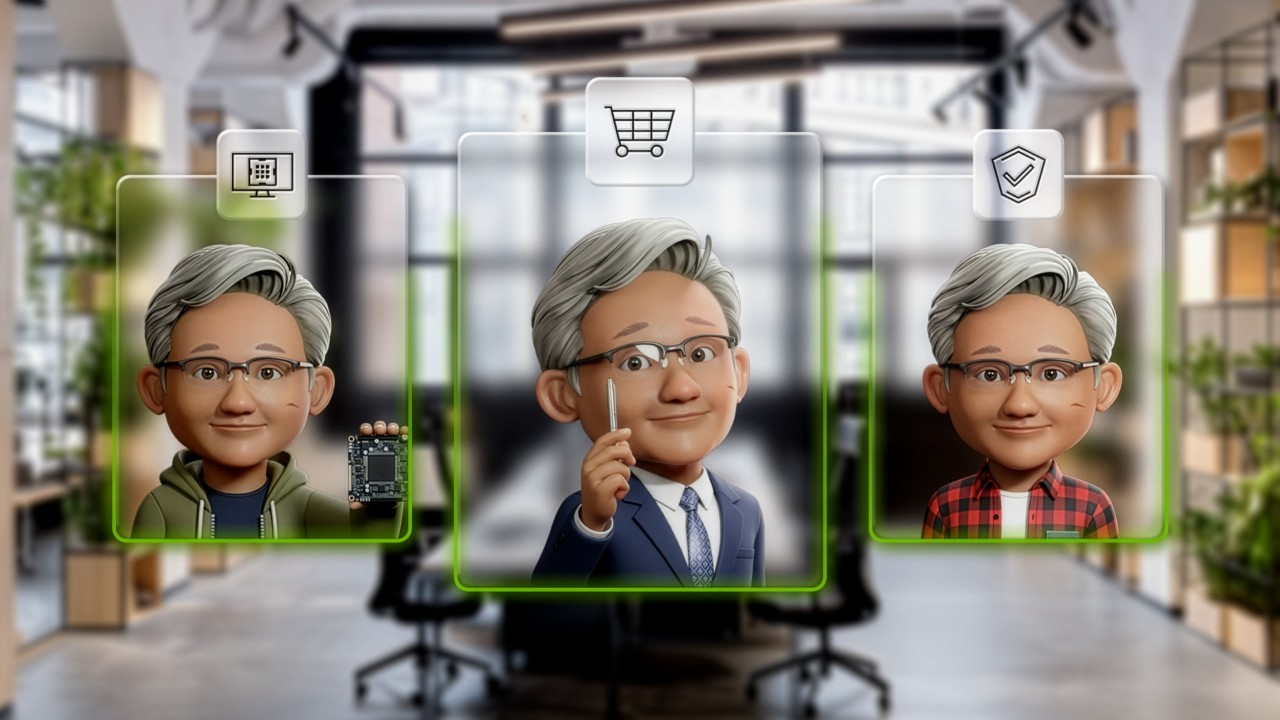
Just as employees begin with general capabilities and develop specialized expertise for specific roles, AI systems follow a similar trajectory. General foundation models are tuned for domain-specific applications so business outcomes can be more easily measured.
For example, ChatGPT and Perplexity are useful generalized intelligence tools built primarily for consumer needs. Their access to vast knowledge across many domains makes them flexible enough to handle varied requests—from guidance on how to complete a task to deep explanations.
In contrast, specialized intelligence creates tailored value for businesses that train it using their unique data, since deep expertise is required to make AI useful in industry environments. These specialized systems are experts, optimized for specific organizational processes and KPIs.
While general intelligence serves consumers through broad accessibility and versatility, specialized intelligence creates transformative enterprise value through domain-specific expertise and business process integration. The goal of specialized AI is to help the next wave of AI applications function as digital workforce members rather than simple tools.
How Does Specialized AI Work?
Specialized AI works by training a model with relevant, specific data so it excels at a particular function or task. A larger system or application typically has specialized models working together to achieve an end goal.
Businesses are finding that specialized intelligence provides more tailored solutions that help both their end customers and employees, as industry terminology is less represented in generalized AI tools.
An example of specialization in agentic AI is building a system of models that understand and interact with end users to execute tasks. These multi-agent systems can have a specialized agent for analyzing PDFs and another for generating reports.
Within physical AI, models can be specially trained to perceive, sense, and seamlessly interact with the world around them. This enables autonomous systems like robots and self-driving cars to perform complex tasks in the physical world.
Quick Links
Benefits of Specialized AI
Organizations gain the following focused advantages from specialized intelligence.
| Benefit | Business Impact |
| Higher throughput on well-defined tasks to support production workflows | Workflows are improved as patterns and improvement gaps are easier to identify |
| Greater reliability in sensitive domains, such as clinical analysis, fraud detection, network health, and logistics operations | Reduced spend through automation, error reduction, and predictive maintenance |
| Systems or tools match internal vocabulary and operating rules through tuning on domain datasets | More relevant experiences and outcomes for users and end-customers |
| Lower runtime and adaptation costs than building or serving large generalized models for each use case | Investment risk decreases, as each project requires less upfront, recurring spend |
Why Industries Use Specialized AI
Whether you’re working with documents, code, or patients, specialized intelligence provides value to diverse domains due to its ability to speak and operate in any language.
Legal and Financial Services
Legal teams can use tools like Harvey to process documents with high accuracy and scale to aid them in making high-stakes decisions.
Financial institutions also use specialized AI for document intelligence to gain insights from loan documents, regulatory filings, transaction records, and market disclosures—which would be impractical to handle manually.
Software Development
Engineers use Cursor AI as an AI coder tool to develop software with higher productivity, resulting in fewer bugs and faster application creation cycles.
Healthcare
Doctors and nurses are getting help from companies like OpenEvidence, which aggregates medical research to help answer clinical questions. Patients receive prompt medical attention that would otherwise require manual review of their records and existing research.
Manufacturing and Robotics
Beyond digital applications, specialized AI bridges physical world applications. In manufacturing and robotics, AI-powered systems must understand and interact with real-world physics and dynamics.
One example is Foxconn, which is developing physical AI-enabled smart factories with digital twins powered by specialized physics-based models.
How PayPal, Synopsys, and Crowdstrike are advancing specialized AI in their industries
Importance of Scaling Laws for Specialized AI
There are three scaling laws that fuel specialized AI development:
Pretraining Scaling: Creates general knowledge and pattern recognition capabilities through large-scale foundation model training using massive datasets.
Post-Training Scaling: Refines general intelligence through supervised fine-tuning, reinforcement learning from feedback, and the use of synthetic data to fine-tune models for specialized tasks.
Test-Time Scaling: Enables AI models to “think longer” and dynamically allocate computational resources during operation for complex reasoning.
This scaling law framework shifts general foundation models into specialized domain experts without requiring complete retraining, making AI deployment more practical and cost effective for enterprises.
What Types of Models Can I Use for Specialized AI?
AI applications are rarely powered by a single model. Most real-world systems combine multiple specialized models—for example, a reasoning model combined with a vision-language model, a retriever, and a safety model can deliver a video search and summarization agent.
Developers typically start by selecting the model types that best match their use case, then combine and customize them as needed.
Below are the major categories developers use when building specialized AI applications:
- Reasoning Models: Models designed for complex, multi-step thinking, such as scientific problem solving, mathematical reasoning, coding, and advanced document analysis. They excel when accuracy, logic, and chain-of-thought reasoning are required.
- Generative AI Models: Large language models (LLMs) trained to produce new content—text, code, images, audio, or video—based on patterns learned during training. Ideal for customer support, content creation, summarization, report generation, and workflow automation.
- Vision-Language Models (VLMs): Multimodal models that understand and generate information across text, images, video, charts, and other structured or visual formats. Commonly used in robotics, medical imaging, diagnostics, and visual analytics agents.
- Small Language Models (SLMs): Lightweight models optimized for low latency, small memory footprint, and cost efficiency. Well-suited for real-time AI assistants, embedded devices, and edge applications.
- Retrieval Models: Models that index, search, and retrieve information from enterprise data sources, documents, databases, logs, code, or images. These form the backbone of retrieval-augmented generation (RAG) systems, enabling agents to ground responses in accurate, up-to-date information.
- Safety and Alignment Models: Models that enforce policies, detect sensitive content, filter unsafe outputs, or guide an agent toward compliant, domain-appropriate behavior. These ensure AI systems operate reliably, ethically, and within enterprise constraints.
Across these categories, developers can choose from open models, proprietary models, or enterprise-ready offerings from NVIDIA and the broader ecosystem. Learn about NVIDIA’s latest safety and speech models.
How To Get Started With Specialized AI Applications for Your Business
Building specialized AI starts with picking the right model for the job and shaping it with the right data. Whether you need a reasoning model for complex analysis, a lightweight model for real-time tasks, or a multimodal model that understands both text and images, the process is the same:
- Choose a strong base model.
- Align it to your domain.
- Evaluate the results.
- Automatically refine it.
NVIDIA provides open models, datasets, tuning tools, and end-to-end workflows to help developers move from a general foundation model to a high-performing, domain-specific system quickly and efficiently.
Development Resources
NVIDIA Nemotron™ is a collection of open-source AI technologies designed for efficient AI development at every stage. It includes:
- Multimodal models: State-of-the-art AI models, delivered as open checkpoints, that excel at graduate-level scientific reasoning, advanced math, coding, instruction following, tool calling, and visual reasoning.
- Pretraining, post-training, and multimodal datasets: Collections of carefully chosen text, image, and video data that teach AI models skills, including language, math and problem solving.
- Numerical precision algorithms and recipes: Advanced precision techniques that make AI faster and cheaper to run while keeping answers accurate.
- System software for scaling training efficiently on GPU clusters: Optimized software and frameworks that unlock accelerated training and inference on NVIDIA GPUs at massive scale for the largest models.
- Post-training methodologies and software: Fine-tuning steps that make AI smarter, safer, and better at specific jobs.
Tools like NVIDIA NeMo™ and NVIDIA Dynamo transform generalized AI models into custom models tailored for specialized intelligence. NVIDIA AI Blueprints also provide a starting point for developing agents to address specific use cases, including RAG. The blueprints contain example applications, reference codes, sample data, tools, and documentation for enterprises.