NVIDIA G-SYNC Monitors with Pulsar & Ambient Adaptive Tech Available January 7: Enjoy Smoother, Clearer Gaming With Over 1,000 Hz Effective Motion Clarity
By Andrew Burnes on January 05, 2026
|
Update: G-SYNC Pulsar Firmware Version 1.1.4 update is available now for Acer Predator XB273U F5, ASUS ROG STRIX Pulsar XG27AQNGV, AOC AGON PRO AG276QSG2 and MSI MPG 272QRF X36 models with G-SYNC Pulsar.
What’s new and improved:
- G-SYNC Pulsar optimizations
- Eliminated sharp double images when operating under 90 FPS
- In-monitor FPS indicator now works correctly below 90 FPS
- Added a fixed 60Hz strobing mode (for games locked to 60Hz)
For details on how to update your monitor to Firmware Version 1.1.4, please go to: https://www.nvidia.com/en-us/geforce/products/g-sync-monitors/update/
In 2013, the launch of G-SYNC revolutionized displays and gaming, introducing Variable Refresh Rate (VRR) technology that all major display manufacturers now incorporate. No longer did gamers have to choose between screen tearing or responsive gameplay, getting the benefits of both V-SYNC On and Off at any refresh rate, making gameplay smoother and more immersive.
In the years since, we’ve further enhanced G-SYNC and its capabilities, and brought its technology to TVs and the cloud, enabling GeForce RTX gamers to have the definitive experience throughout their homes.
This week, the next generation of G-SYNC begins with the launch of G-SYNC Pulsar, the latest evolution of our pioneering VRR technology. G-SYNC Pulsar delivers a stutter-free experience with buttery smooth motion, and a new gold standard for visual clarity and fidelity through the invention of variable frequency backlight strobing.
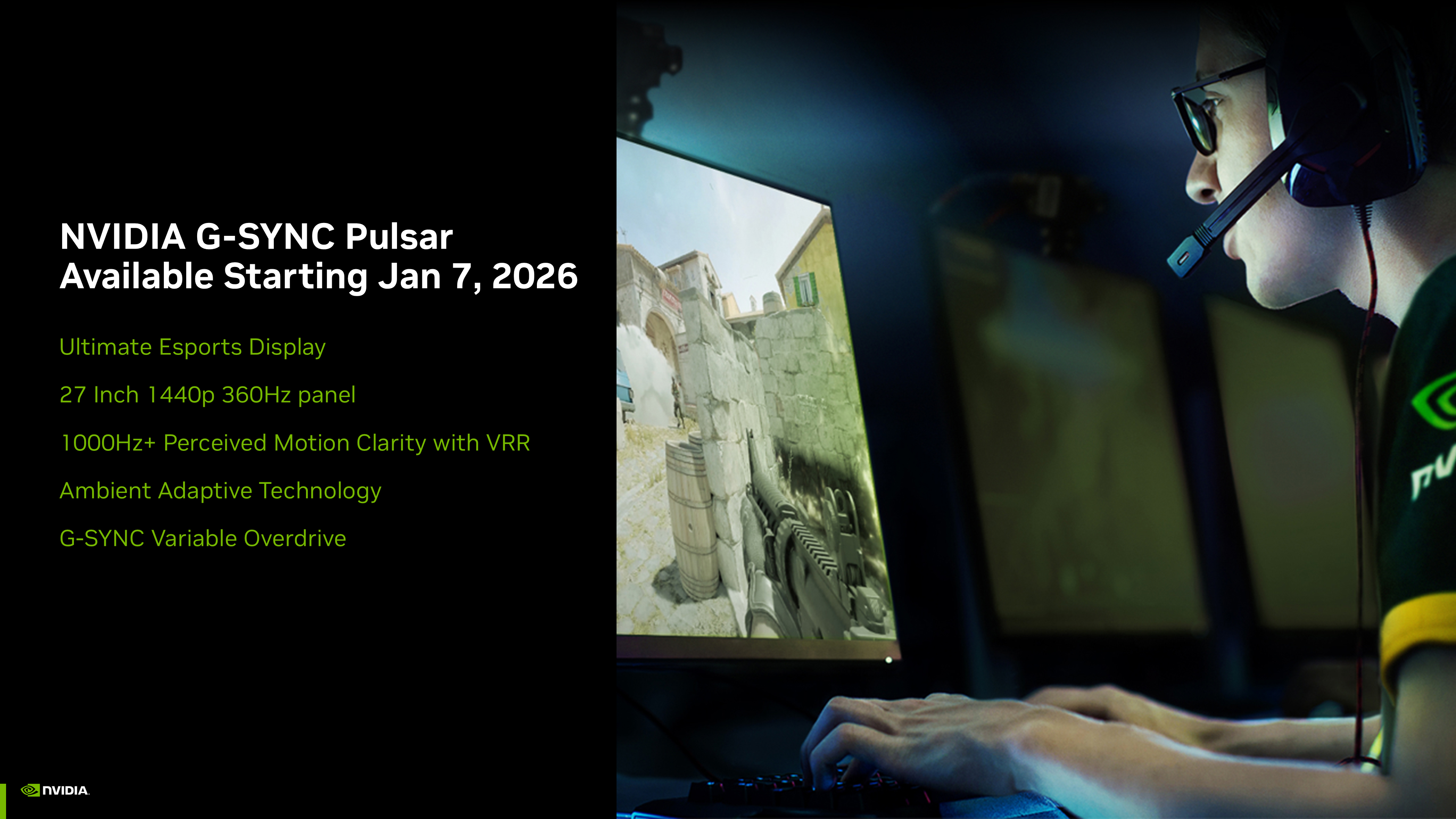
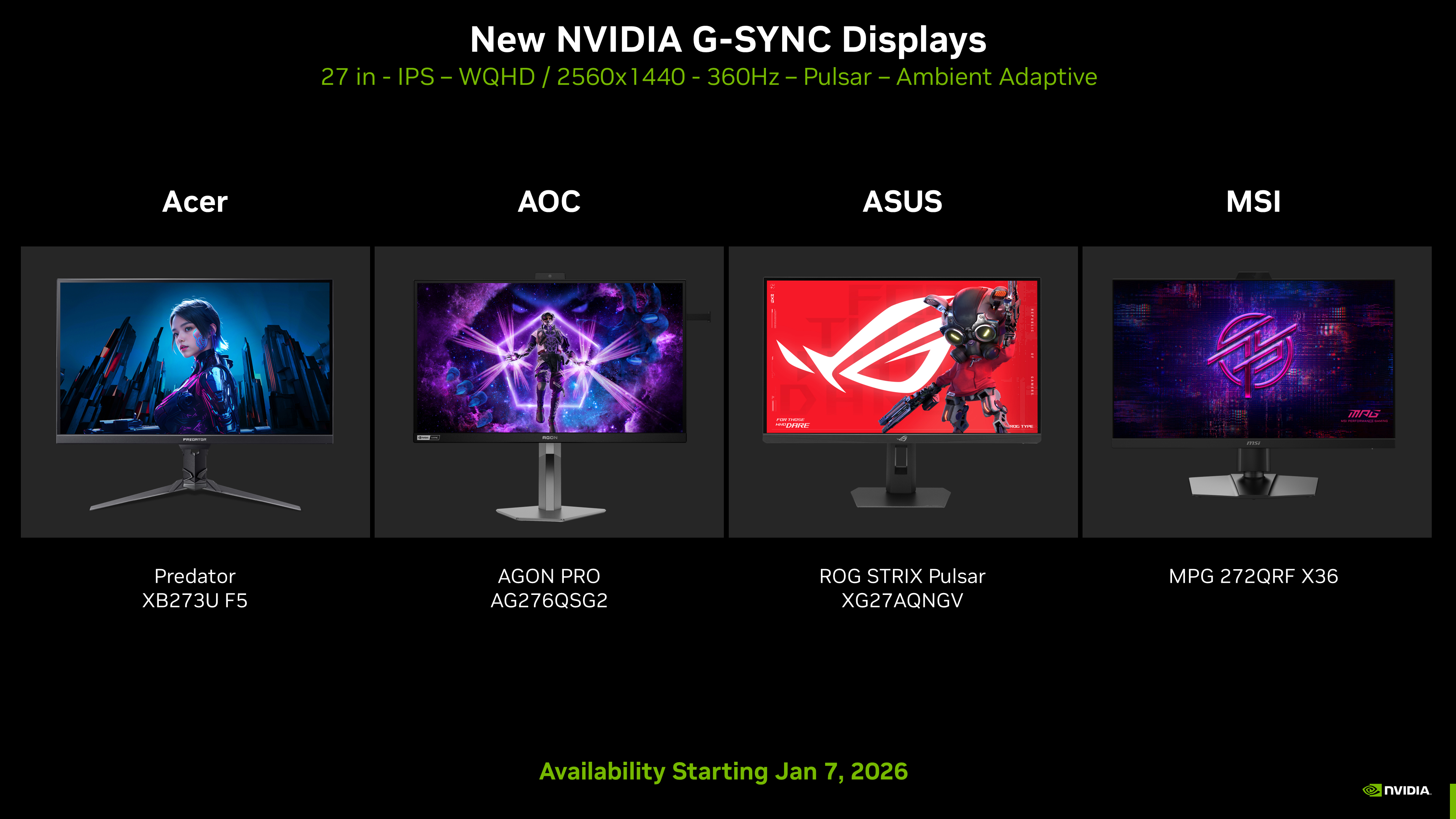
G-SYNC Pulsar displays from Acer, AOC, ASUS and MSI will be available starting January 7th, 6AM PT, at select retailers, with additional retailers and units coming over the following weeks.
Each of the debut G-SYNC Pulsar displays also include our new G-SYNC Ambient Adaptive Technology, enabling color temperature and brightness to be automatically tuned for optimal viewing at any hour of the day or night.
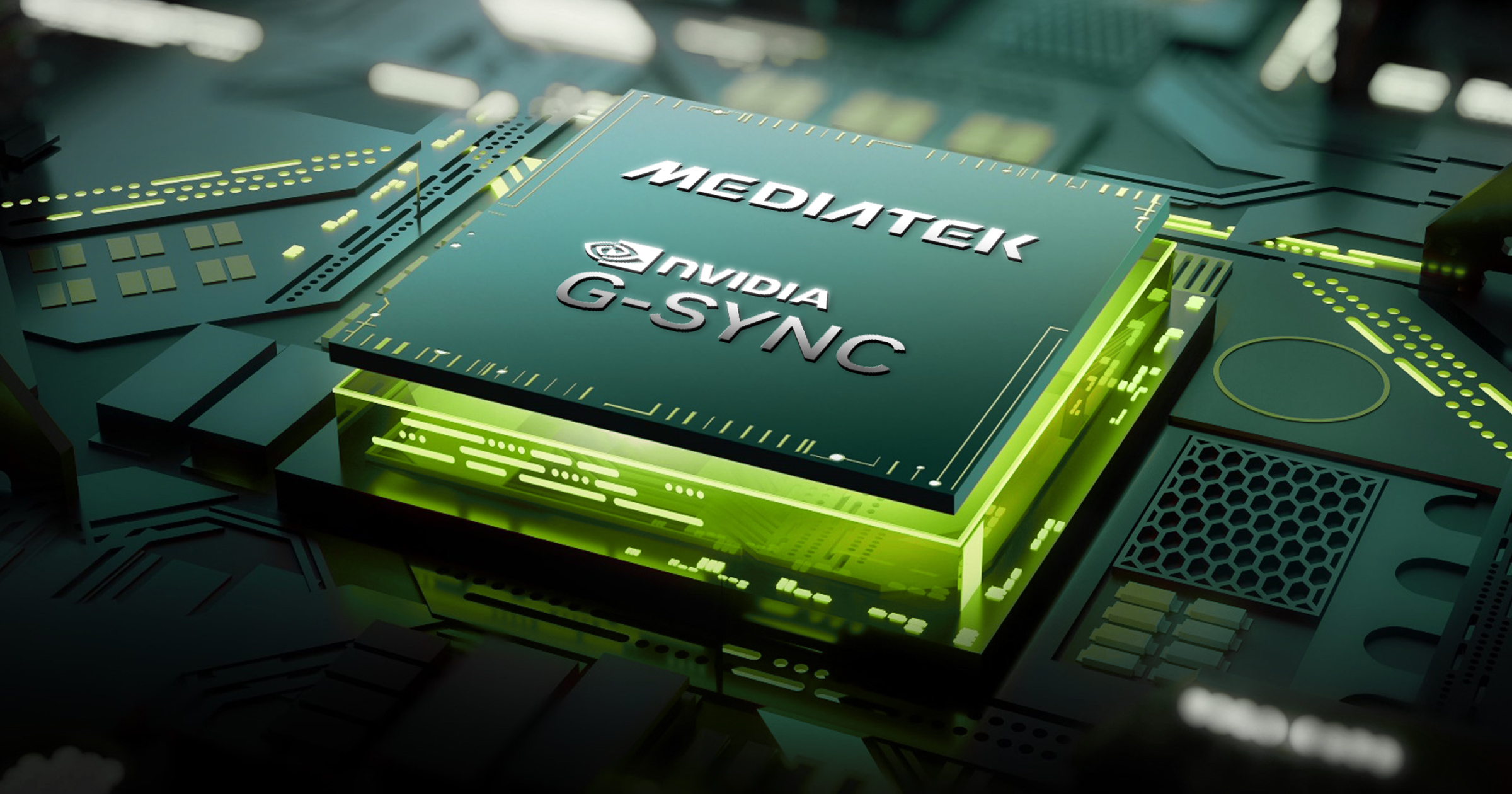
These new G-SYNC displays are the first to be built in collaboration with MediaTek, enabling G-SYNC technologies to be incorporated directly into the display scaler, bypassing the need for dedicated G-SYNC modules. This streamlines production, making G-SYNC more accessible for monitor manufacturers, helping us bring G-SYNC technologies and displays to more consumers faster than ever before.
For more info about G-SYNC Pulsar and Ambient Adaptive Technology, check out the video above and keep reading
Also, there are 63 new G-SYNC Compatible displays, including the world’s first 1,040 Hz gaming monitor from Samsung, and 2026 TVs from LG.
G-SYNC Pulsar: The Next Generation Of VRR Gaming
G-SYNC Pulsar provides ultimate motion clarity, together with all the benefits of VRR. ULMB and ULMB2 were our first solutions to improve motion clarity. But they only worked at fixed refresh rates: you had to choose between motion clarity with tearing, or smooth frames with display-based motion blur. G-SYNC Pulsar gives you both: tear free frames, and incredible motion clarity.
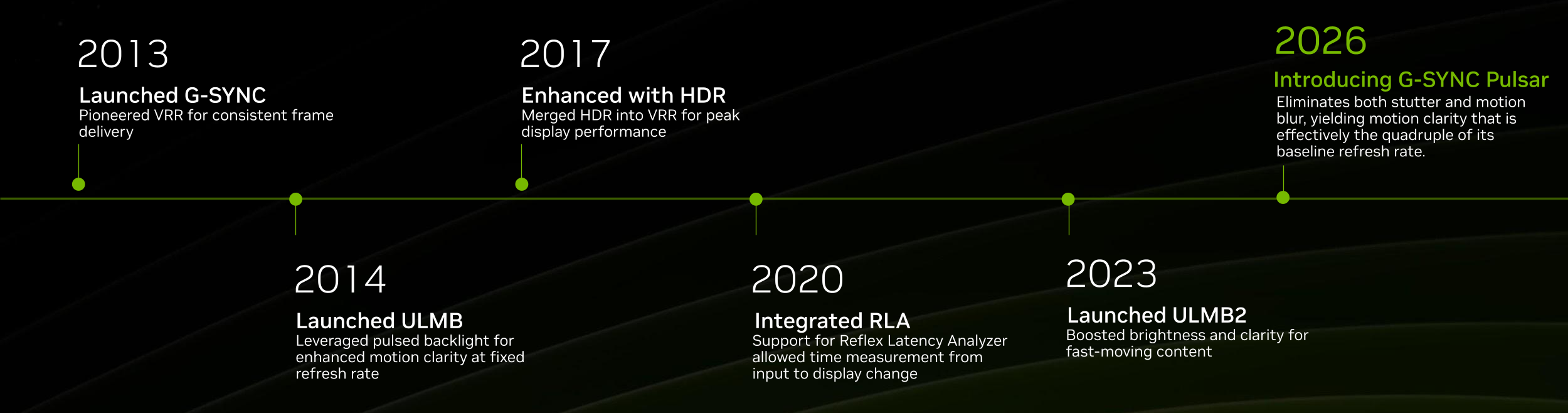
By pulsing the display’s backlight, G-SYNC Pulsar displays deliver perceived effective motion clarity of over 1,000 Hz, significantly increasing the clarity and visibility of content in motion, enabling you to track and shoot targets with increased precision. In other words, play at 250 frames per second and G-SYNC Pulsar will provide motion clarity effectively quadruple that of your refresh rate.
For gamers demanding the highest levels of clarity and motion smoothness, whether that’s in immersive single-player games, competitive multiplayer, or esports tournaments, G-SYNC Pulsar displays are an amazing new option, delivering a smoother, higher fidelity experience than high refresh rate, low resolution displays.
In the video below, a pursuit camera recorded Counter-Strike 2 running identically on a 360Hz G-SYNC monitor with and without G-SYNC Pulsar. The reduction of monitor-based motion blur with G-SYNC Pulsar enabled is immediately evident, greatly improving clarity, fidelity, target tracking and target acquisition, helping improve hit rate, and more, making users more competitive online.
For immersive games, G-SYNC Pulsar’s ability to maintain consistent smoothness and clarity enhances the player's sense of being part of the game world, free from immersion-breaking blur. A pursuit camera recording Anno 117: Pax Romana exemplifies this massive improvement with G-SYNC Pulsar enabled, providing more clarity when navigating the map to locate structures or units in a busy scene.
Traditional VRR technologies dynamically adjust the display’s refresh rate to match the GPU’s frame rate, effectively eliminating stutter and tearing.
To evolve VRR further, the aspiration has always been to unify it with advanced strobing techniques to eliminate display motion blur (not to be confused with in-game motion blur). Display motion blur is caused by both slow LCD transitions, and the persistence of an image on the retina as our eyes track movement on-screen.
Modern LCD panels typically have two parts. The backlight and the LCD Crystal Array. As new information is scanned out to the display, the display will drive an electrical signal that forces the crystals to transition, changing the luminance of red, green or blue pixels and producing a new color. The light passing through the LCD Crystal comes from the backlight and is traditionally lit the entire time.

The blurriness of the object is caused by motion hold. Since the backlight is always on, the image we see does not gracefully slide from one side to the other. Rather, it holds in a single position and then fades to the next.
G-SYNC Pulsar displays have multiple horizontal backlight sections that are independently pulsed from top to bottom.
With this ‘rolling scan’ scheme, pixels are given almost a full frame time to achieve the right values before being backlit and showing objects at the correct location.
G-SYNC Pulsar pulses at 25% of a frame time. And the pulse happens right before the next scanout, right before pixels are overwritten with the next frame.
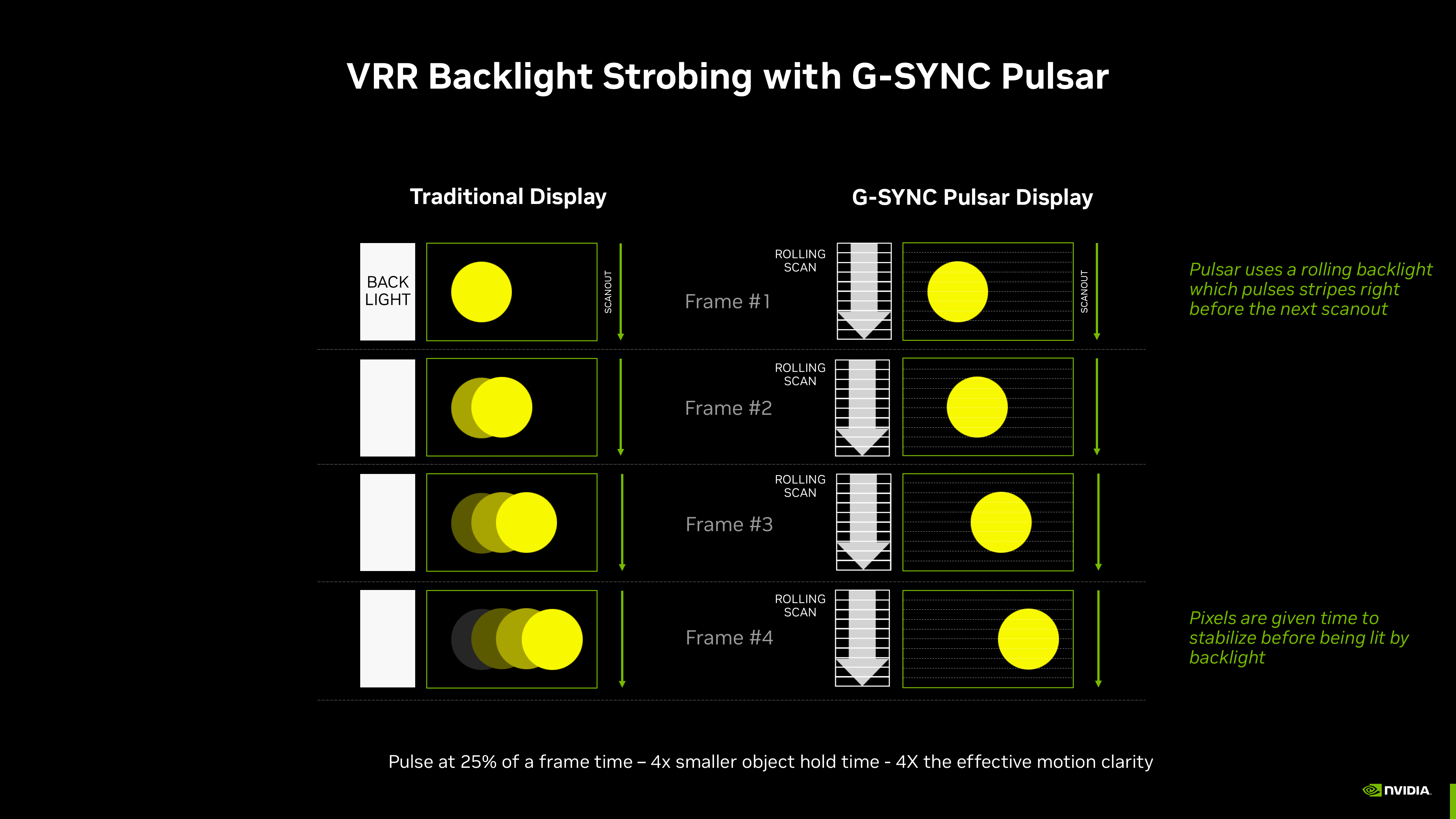
By default, Pulsar works from 90 FPS to the maximum refresh rate of the monitor
Above, you can see Pulsar behavior next to a traditional display. At 250 FPS with Pulsar, you get the effective motion clarity of a theoretical 1,000 Hz monitor.
This represents a leap beyond incremental updates, or a combination of existing technologies. It is a radical rethinking of display technology, necessitating the development of new panel technology, and represents a fundamental reengineering at both hardware and software levels.
Each frame is delivered with both stutter-free smoothness, and motion clarity that is effectively the quadruple of its baseline refresh rate. Even in the most intense and fast-paced games.
The true impact of G-SYNC Pulsar is unmistakable in action. When enabled, the technology offers starkly smoother scenes and sharper clarity in motion, surpassing the capabilities of earlier monitor technologies that attempted to combine VRR and strobing.
This advancement offers distinct advantages for various gaming genres. In competitive gaming, the elimination of stuttering is crucial, as these distractions can impede performance and affect outcomes. Similarly, enhanced motion clarity can provide a competitive edge, where precise tracking and response to fast-moving elements and friend-foe distinction are paramount.
Furthermore, G-SYNC Pulsar simplifies the user experience by eliminating the need to switch between different monitor settings for either VRR or strobing technologies. Whether it's for the high-stakes environment of competitive gaming, or the rich, detailed worlds of immersive titles, G-SYNC Pulsar delivers a superior and convenient visual experience tailored to all facets of gaming.
G-SYNC Ambient Adaptive Technology
The G-SYNC monitors launching this week with Pulsar also include another new feature: G-SYNC Ambient Adaptive Technology. This utilizes a built-in light sensor to give users the option to automatically tune color temperature and/or brightness based on the ambient lighting in the room, for optimal viewing at any hour of the day or night. Avoid being blinded at night, and ensure you see enemies even on the brightest days, without having to manually change your monitor settings throughout the day.
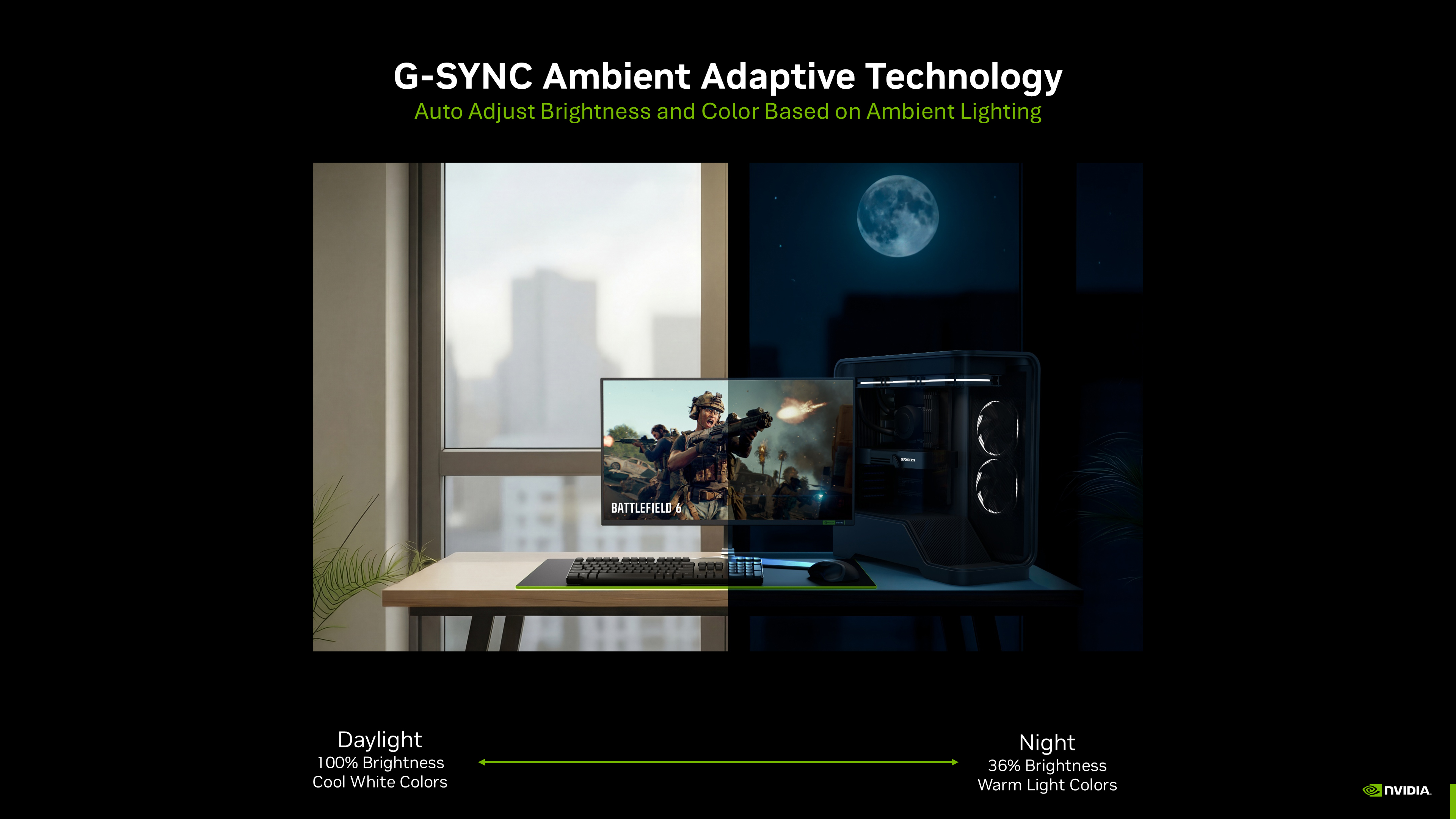
Each G-SYNC Pulsar display launching January 7th from Acer, AOC, ASUS and MSI includes G-SYNC Ambient Adaptive Technology
G-SYNC Comes To The World’s Leading Display Scalers
This week’s new G-SYNC displays with Pulsar and Ambient Adaptive Technology are the first to be built in collaboration with MediaTek. NVIDIA is working closely with MediaTek, the world leader in gaming display scalers, to incorporate G-SYNC technologies directly into their scalers, bypassing the need for dedicated G-SYNC modules.
This collaboration enables us to streamline production, making G-SYNC more accessible for monitor manufacturers, helping us bring G-SYNC technologies and displays to more consumers faster than ever before.
G-SYNC Displays With Pulsar & Ambient Adaptive Technology Launch January 7th
G-SYNC displays with Pulsar and Ambient Adaptive Technology, from Acer, AOC, ASUS and MSI will be available starting January 7th at 6AM Pacific time at select retailers, with additional retailers and units coming over the following weeks. Prices start at $599 in the United States.
All four displays feature a 27 inch 2560x1440 IPS display that runs at a 360Hz refresh rate, with 500 nits of peak brightness in HDR. Additionally, all models are capable of receiving firmware updates using the micro-B USB firmware update port, enabling us to share G-SYNC Pulsar improvements with end-users.
Over 60 New G-SYNC Compatible Displays Give Users Even More Choice
G-SYNC Compatible displays deliver a baseline Variable Refresh Rate (VRR) experience that’s been validated by our G-SYNC team, making gaming smoother and more enjoyable. G-SYNC Compatible VRR is available on hundreds of monitors and TVs from leading manufacturers, in all sizes and at all price points, giving GeForce users a ton of choice when searching for a display.
In our new GeForce Game Ready Driver, our team has validated another 63 G-SYNC Compatible displays, including new 2026 TV models from LG and Samsung, and new monitors.
On the list, there’s support for the new 27-inch G-SYNC Compatible Samsung Odyssey G60H monitor, the world’s first 1,040Hz dual mode competitive gaming display.
And support for the ASUS ROG Strix 5K XG27JCG, a 27-inch, 180Hz, Fast IPS 5120x2880 (5K) display, with 218 pixels per inch, the highest of any G-SYNC Compatible display, for users seeking super sharp images and detail. And for gamers wanting faster response times and refresh rates in competitive titles, the XG27JCG can switch to a 2560x1440 330Hz mode.
For the complete list of new additions, head here, and to see a list of all G-SYNC displays, head to the G-SYNC homepage.
G-SYNC Pulsar: The Next Generation Of VRR Gaming Is Here
Whether you game on a monitor, display or TV, locally on a PC or laptop, or via GeForce NOW in the cloud, G-SYNC technology is available to enhance your experience, delivering a smoother and more responsive experience.
All G-SYNC displays are factory calibrated, and undergo rigorous testing in NVIDIA’s lab to ensure users receive an excellent experience - if you see the G-SYNC logo, you’ll know the display meets all of our requirements to receive the G-SYNC badge of honor.
With the introduction of G-SYNC Pulsar on January 7th, NVIDIA has addressed a challenge that has persisted for over a decade, advancing the state of the art in display technology once again. Enjoy unprecedented motion clarity, game with over 1000 Hz effective motion clarity, and benefit from G-SYNC’s best-in-class variable refresh rate experience. The best just got better.
To check out our other announcements from CES 2026, head to GeForce.com.