Design space is infinite. Schedules aren’t. GPU-accelerated EDA compresses the path from RTL to sign-off so teams explore more and respin less.

Accelerating Semiconductor Design and Manufacturing
Powering semiconductor breakthroughs with AI, digital twins, and accelerated computing.
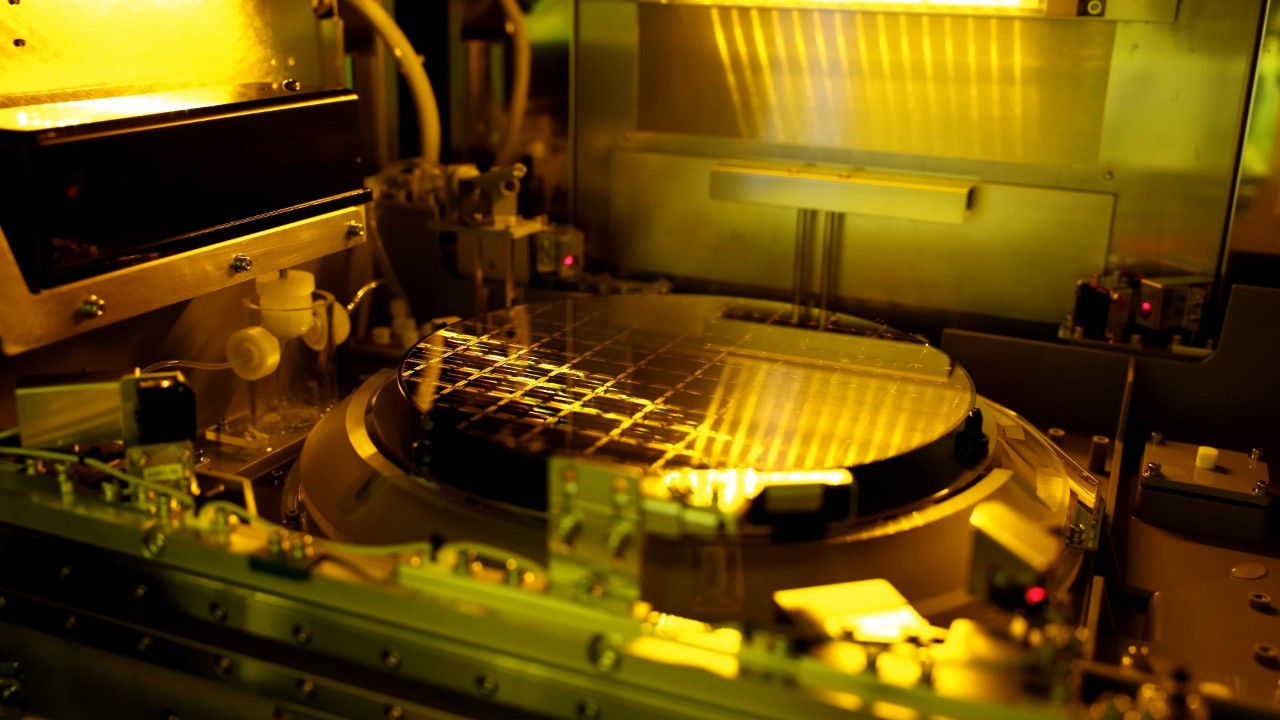
Image courtesy of TSMC
Introduction
Accelerated Computing and AI for Semiconductor Workflows
Shrinking nodes, 3D integration, and chiplet architectures are pushing compute demands beyond what CPU-based tools can sustain. Fabs and OSATs face the same pressure from the manufacturing side, needing higher throughput, better yields, and tighter process control at every node.
NVIDIA platforms combine GPUs, NVIDIA Vera CPUs, high-speed interconnects, NVIDIA CUDA-X™ and NVIDIA Omniverse™ libraries to accelerate computing, power AI, and real time digital twins, across the full semiconductor workflow, from design and verification to fab operations, inspection, and test.
Use Cases
Semiconductor Use Cases: Accelerated Computing, Engineering With AI, and Physical AI
From design and verification to lithography, fab optimization, inspection, and test, NVIDIA powers critical semiconductor workflows with full‑stack acceleration.
Accelerated EDA
Lithography
The Age of the Autonomous Engineer
Accelerating Reactor Simulation with AI Physics
Fab Operations
Wafer Inspection
Success Stories
Semiconductor Success Stories and Real-World Impact
Learn how leading semiconductor innovators use NVIDIA-accelerated computing to boost yield, increase throughput, and cut costs.


News and Events
Latest News and Events for Semiconductor Industries

Technology
Full‑Stack Acceleration for Semiconductor Workflows
Semiconductor workloads demand high performance, massive scale, and tight integration across tools, data, and infrastructure. NVIDIA delivers a full‑stack platform for core workload acceleration, engineering with AI software, and real-time digital twins built for compute‑intensive design, simulation, and manufacturing.


FAQs About NVIDIA Solutions for Semiconductor Industries
Electronic Design Automation (EDA) is the category of software tools used to design and verify integrated circuits. NVIDIA accelerates EDA by combining GPUs and CUDA-X libraries with tools from partners like Cadence and Synopsys to dramatically compress the time required to move from RTL to chip sign-off.
- Read more about how AI-Powered EDA and Blackwell accelerate design processes.
- Explore the latest breakthroughs in accelerated computing for the semiconductor industry.
cuLitho is an NVIDIA CUDA-X library designed to accelerate computational lithography—the process of optimizing photomasks to counteract patterning issues during chip manufacturing. By moving full-chip lithography simulation to GPUs, cuLitho compresses what historically took days of computation into a matter of hours, enabling faster time-to-yield.
- Visit the dedicated NVIDIA cuLitho developer page for technical documentation.
cuDSS is a foundational solver library within the NVIDIA CUDA-X platform, designed to provide core workload acceleration for EDA and other computationally-intensive processes. It delivers highly optimized solvers for tasks that are critical to electronic design automation tools.
- Find technical resources and support for CUDA-X libraries like cuDSS.
cuEST is a component of the NVIDIA CUDA-X libraries used for atomic-level modeling and simulation in the semiconductor workflow. It provides acceleration for highly detailed simulations required in materials science and process engineering.
- Explore the specific capabilities of the cuEST acceleration library on the NVIDIA Developer site.
PhysicsNeMo are AI surrogate models that use AI physics to accelerate reactor simulation. They replace computationally complex, multi-day simulations of etch and deposition reactors—which involve coupled physics—with evaluations that take milliseconds, significantly accelerating chamber design and process development.
- Learn about accelerating simulations with NVIDIA PhysicsNeMo AI Physics models.
NVIDIA Omniverse is a platform used to build and operate real-time digital twins. In the semiconductor industry, it simulates entire fabs and manufacturing facilities to optimize operations, test new workflows, and orchestrate smarter factories by creating a virtual replica of the physical world.
- Discover how the NVIDIA Omniverse platform is used for industrial digitization and simulation.
The NVIDIA full-stack platform combines GPUs (such as Blackwell), NVIDIA Vera CPUs, high-speed interconnects, and a software layer that includes the NVIDIA CUDA-X™ libraries (like cuLitho, cuDSS, and cuEST) and the NVIDIA Omniverse™ platform for digital twins.
- Learn about the foundational elements of the NVIDIA platform for data centers and accelerated computing.
Core Workload Acceleration leverages the NVIDIA CUDA-X platform, including foundational solver libraries like cuDSS, as well as domain-specific tools such as cuLitho for lithography and cuEST for atomic-level modeling.
- Explore the available CUDA-X libraries and technologies for scientific and engineering acceleration.
Major partners span the entire workflow, including EDA leaders like Cadence and Synopsys, manufacturing equipment suppliers such as Lam Research, and chipmakers like TSMC and Samsung, all of whom are leveraging NVIDIA's platforms to accelerate their processes.
- Read the blog post detailing how leading semiconductor companies are adopting NVIDIA technologies.
- Review the case study on how Alsemy accelerates chip modeling using Physics-Informed AI.
Agentic AI refers to the autonomous software agents used primarily in the design and verification stages (e.g., executing chip design tasks), while physical AI is used for intelligent automation in the manufacturing process itself, leveraging tools and sensors to optimize quality and productivity on the factory floor.
- Learn more about the components and uses of agentic AI in complex workflows.
- Understand the function and implementation of generative physical AI for industrial automation.
Partners
Semiconductor Partner Ecosystem


Resources
Semiconductor Industry Resources
-
Videos
-
Sessions


Get Started
Stay up to date on NVIDIA Semiconductor News
NVIDIA Developer Program
Join the NVIDIA Developer Program for access to free SDKs, support, and tech resources. Gain early access to NVIDIA technology, support from forums, and expert training.