
Higher Education / Research
VinuesaLab Advances Urban Flow Simulations With AI Powered by NVIDIA PhysicsNeMo
Objective
Rapid urbanization challenges cities to monitor and simulate turbulent wind patterns for air quality, climate resilience, and infrastructure planning. To meet this need, researchers at the University of Michigan developed Diff-SPORT, which combines generative models with advanced inference to deliver scalable, interpretable urban flow simulations. Guided by Ricardo Vinuesa, lead of the VinuesaLab and associate professor of aerospace engineering at the University of Michigan, the team merged computational fluid dynamics with AI platforms. The framework was built using NVIDIA PhysicsNeMo, which provides the core infrastructure for diffusion models and physics-informed machine learning.
Customer
VinuesaLab at the University of Michigan
Use Case
Simulation / Modeling / Design
Key Takeaways
10x Faster Training
- Achieved a tenfold speedup in model training using NVIDIA PhysicsNeMo and RTX™ GPU acceleration, reducing processing time from hours to seconds.
3D Urban Flow Simulations
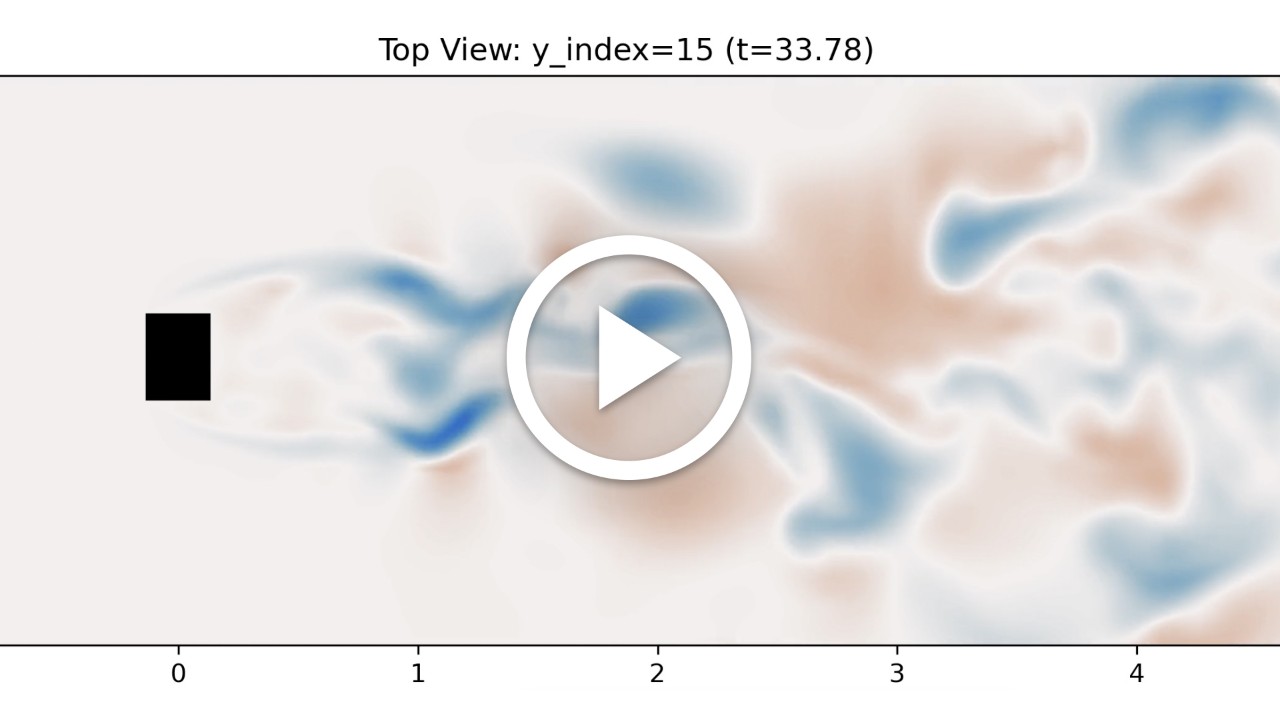
- Enabled high-resolution, city-scale 3D turbulence modeling, advancing from 2D to fully interactive 3D environments for more accurate and actionable insights.
Real-Time Environmental Insights
- Developed a real-time emulator capable of visualizing wind patterns, pollutant hotspots, and temperature changes, supporting data-driven urban planning and resilience strategies.
Consistent Monitoring of Turbulent Flows
Wind flow is a critical factor shaping the health, sustainability, and resilience of urban environments. With over 4.2 billion people currently living in cities and turbulent wind patterns becoming increasingly unpredictable due to climate-induced stressors, it’s now more critical than ever to understand and accurately simulate complex urban airflows
These flows profoundly influence air quality—a major concern given that the World Health Organization (WHO) estimates 4.2 million premature deaths annually due to air pollution. They also contribute to the pervasive urban heat effect, which can make cities 3 to 5 degrees Celsius warmer than surrounding rural areas, significantly increasing energy demand and heat-related health risks.
VinuesaLab at the University of Michigan has been working to create a reliable urban-flow simulation.
The origins of this research began with Ricardo Vinuesa’s earlier work using computational studies of aerodynamics and fluid mechanics in airplanes.
“Aerodynamics and turbulence are unsolved problems of physics,” said Ricardo Vinuesa, head of the lab. “The answer must be in the data, so we were inspired and intrigued by using AI methods to really interrogate this data, and that’s the type of solutions we have been obtaining to develop very efficient frameworks.”
Creating accurate wind-flow simulations requires targeted sensor placement for monitoring equipment in ever-changing urban landscapes—a process that can be expensive and time-consuming. Without efficient flow-reconstruction methods, it is a struggle to find ideal locations to ensure maximum accuracy in capturing flow patterns.
Additionally, traditional computational fluid dynamics (CFD) methods for urban flow simulation faced a trade-off between accuracy and speed. Achieving high-fidelity results requires immense computational resources, making real-time analysis and rapid design iteration nearly impossible for practical applications.
The researchers’ models were also constrained to the realm of 2D, due to fluid-flow issues at large scales being incredibly data and resource intensive. The current system simply couldn’t keep up with the needed memory requirements and longer training times needed to scale further.
“To achieve city-scale 3D modeling with actionable results for urban planning, we needed computational power far beyond traditional CPU-based approaches,” said Vinuesa. “We recognized that GPU acceleration was essential to make high-resolution 3D urban flow reconstruction practical, rather than purely theoretical.”
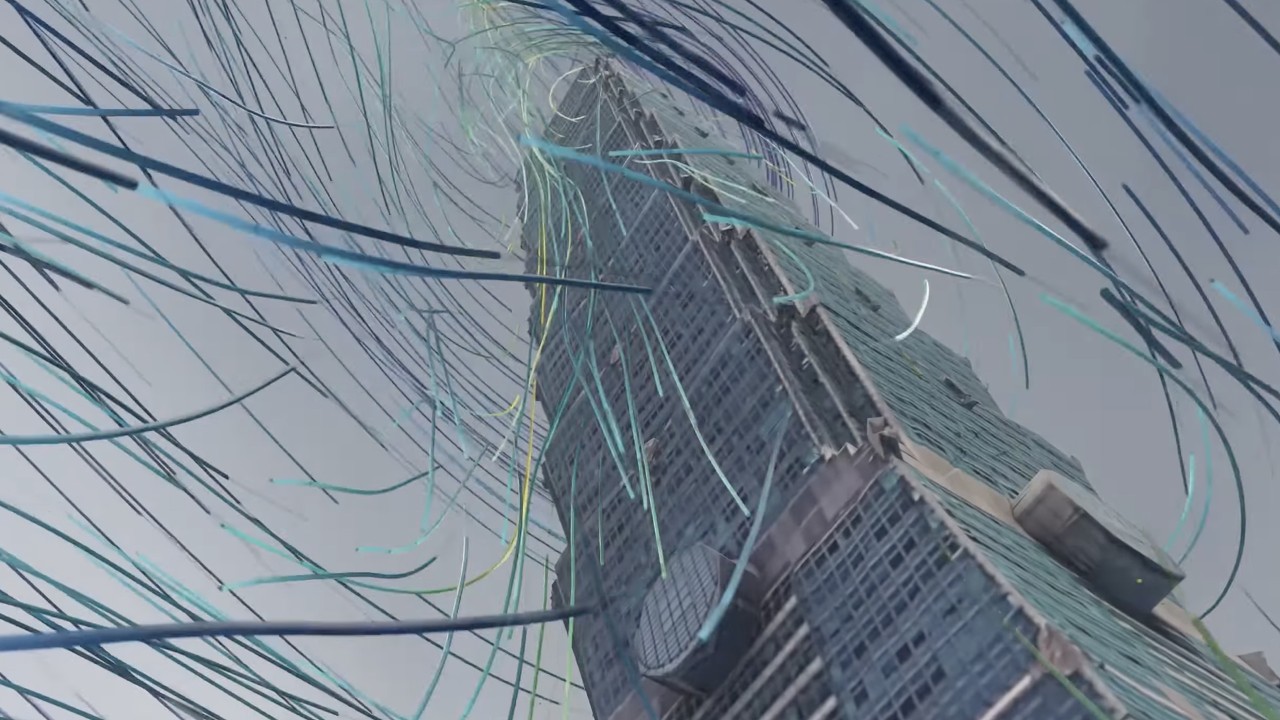
Modeling urban simulations in 3D was vital for the researchers because turbulence is inherently three-dimensional. To understand the physics of turbulence, it needs to be shown in a three-dimensional, interactive space to showcase the coherent motions and regional flows that occur in cityscapes.
Scaling Opportunities on the Horizon
PhysicsNeMo is continuing to allow for novel possibilities for the research team at the University of Michigan. The software enables seamless multi-node runs, which means they are no longer constrained by single-computer limitations. This ability opens the door to modeling entire metropolitan areas at high resolution.
Currently, the team is exploring collaborations in Europe and the US to work with real city layouts. Barcelona and South Hampton are two regions with projects underway to further deploy this technology.
NVIDIA has continued to support this project through the NVIDIA Academic Grant Program, which awarded the team eight NVIDIA A100 Tensor Core GPUs, accessed through 16,000 compute hours and Open Hackathons. Recently, the research team engaged in a collaboration under the NVIDIA AI Technology Center (NVAITC) program at the Finland location, which provides hands-on engineering assistance for all NVIDIA frameworks in a research context.
Recently, the research team’s work was also integrated into the PhysicsNeMo repo, emphasizing their ongoing collaboration with the NVIDIA ecosystem.
“We recognized that GPU acceleration was essential to make high-resolution 3D urban flow reconstruction practical, rather than purely theoretical.”
Ricardo Vinuesa
Lead of the VinuesaLab
NVIDIA’s PhysicsNeMo Python framework aids in training, building, and curating complex physics-based models and digital twins.