What Is Autonomous Vehicle?
Autonomous vehicles are passenger vehicles, robotaxis, trucks, and commercial vehicles that navigate and operate with little or no human input. They use sensors—including cameras, radar, and lidar—to perceive their environment, AI software to make driving decisions, and high-performance compute to execute those decisions in real time.
What Are The Levels of Automation?
The capability of an autonomous vehicle is defined by how much of the driving task it can handle without human involvement. The Society of Automotive Engineers (SAE), the global standards body for the automotive industry, has established six levels of automation that the industry uses to classify autonomous driving systems.
Level 0: No automation. The driver handles all tasks. Features like automatic emergency braking assist momentarily but do not control the vehicle.
Level 1: Driver assistance. The system controls one function, such as speed via cruise control, and the driver manages everything else.
Level 2: Partial automation. The system manages both speed and steering in defined conditions, but the driver must remain attentive and supervise.
Level 2+: Expanded automation. Extends Level 2 by integrating multiple driver assistance functions into a more capable package. The driver remains responsible and must supervise at all times.
Level 2++: Expanded automation. Extends Level 2+ to allow attention-off operation in defined conditions, such as highways within specific speed ranges. The driver does not need to monitor the road actively but must be ready to resume control. NVIDIA DRIVE AV supports Level 2++ through Level 4 autonomy.
Level 3: Conditional automation. The vehicle handles driving within defined conditions, but the driver must be ready to take control when the system requests it.
Level 4: High automation. The vehicle operates without human intervention within a defined operational area. Most commercial robotaxi deployments operate at Level 4.
Level 5: Full automation. The vehicle operates without human involvement in all conditions.

How Does Autonomous Vehicle Work?
Autonomous vehicles are powered by physical AI, taking in real-time data from onboard sensors, processing it using end-to-end foundation models running on high-performance compute, and planning and executing driving decisions.
Building a production autonomous vehicle requires a coordinated process across three specialized computers.
- Training Computer: NVIDIA DGX™
- AV Simulation: NVIDIA Omniverse™ With Cosmos on NVIDIA RTX PRO™ Servers
- In-Vehicle Computer: NVIDIA DRIVE AGX™
NVIDIA DRIVE AGX is the in-vehicle compute platform for autonomous vehicles and robotaxis, providing the AI performance required to execute perception, planning, and control workloads in real time. The optimized AV stack runs on DRIVE AGX Thor™ within NVIDIA DRIVE Hyperion™, the reference architecture for Level 4 autonomous vehicles, alongside NVIDIA DriveOS, the safety-certified operating system for real-time processing and system monitoring.
Together, these three computers enable continuous development cycles. As autonomous vehicles drive in the real world, sensor data is collected and sent to the data center. The data is used to refine the AV software stack and add new capabilities. After training, the stack is retested and validated in simulation, then updated on the in-vehicle computer. The cycle then starts again with more driving and data collection.
NVIDIA Halos is a full-stack comprehensive safety system that unifies vehicle architecture, AI models, compute, software, tools, and services across all three computers to ensure the safe development and deployment of autonomous vehicles from cloud to car.
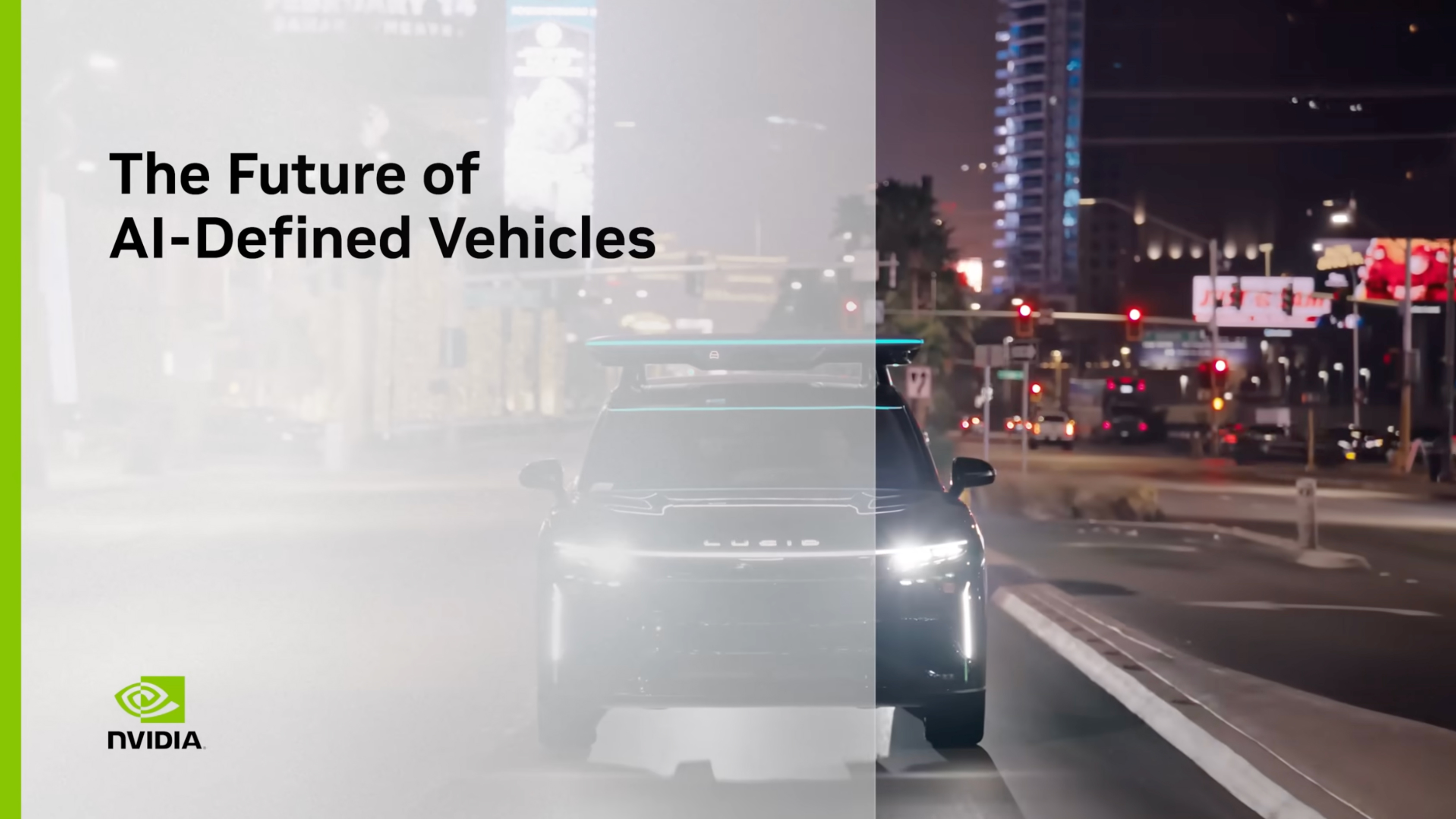
What Are Some Use Cases for Autonomous Vehicles?
Autonomous vehicles are being developed and deployed across a growing range of industries and applications, from personal transportation to commercial freight and industrial operations.
Passenger Vehicles
OEMs are integrating autonomous driving features into passenger vehicles, enabling hands-free highway driving, automated parking, and self-navigating trips. As regulatory frameworks mature, fully driverless personal vehicles are expected to enter the market across multiple regions.
Robotaxis
Commercial ride-hailing networks are integrating autonomous vehicles to offer scalable, on-demand transportation without the constraints of driver availability or shift limits. Multiple global mobility operators are currently scaling autonomous fleets in major cities around the world.
Long-Haul Freight and Trucking
AV technology is being applied to Class 8 trucks to address driver shortages, reduce operating costs, and improve safety on highway routes. Autonomous trucks can run extended hours without fatigue-related constraints, increasing throughput on high-demand freight corridors.
Autonomous Delivery
Autonomous vehicles are being adapted for last-mile delivery of groceries, packages, and prepared meals, extending the economic model of AV platforms beyond passenger transport. Both purpose-built delivery vehicles and repurposed passenger platforms are being deployed by logistics and retail operators.
Construction and Industrial Sites
Autonomous vehicles are operating in controlled off-road environments such as mines, construction zones, and warehouses, where GPS-defined boundaries and predictable terrain reduce deployment complexity. These applications are among the most commercially mature AV use cases today.
Agricultural and Rural Operations
Autonomous tractors and field vehicles are navigating farmland to perform seeding, spraying, and harvesting with minimal human intervention. The structured nature of agricultural environments makes them well-suited for early AV adoption at scale.
What Are the Benefits of Autonomous Vehicle?
What Are Some Challenges and Solutions To Deploying Autonomous Vehicles?
Deploying AVs at scale requires solving regulatory, technical, and social challenges. Here are the primary barriers and the approaches the industry is using to address them.
Next Steps
Learn More About Autonomous Vehicles
Deep dive into NVIDIA DRIVE AGX—the hardware and software platform to develop safe autonomous vehicles.
Read the Autonomous Vehicles Safety Report
Safety is imperative to developing autonomous vehicles. Learn how NVIDIA is prioritizing vehicle, occupant, and pedestrian safety in our latest report.
Discover NVIDIA AI Solutions in Automotive
NVIDIA automotive solutions offer the performance and scalability to design, visualize, develop, and simulate the future of driving.


